Why Coffee Grounds Lose Their Profile and How Extraction Mechanics Fix It
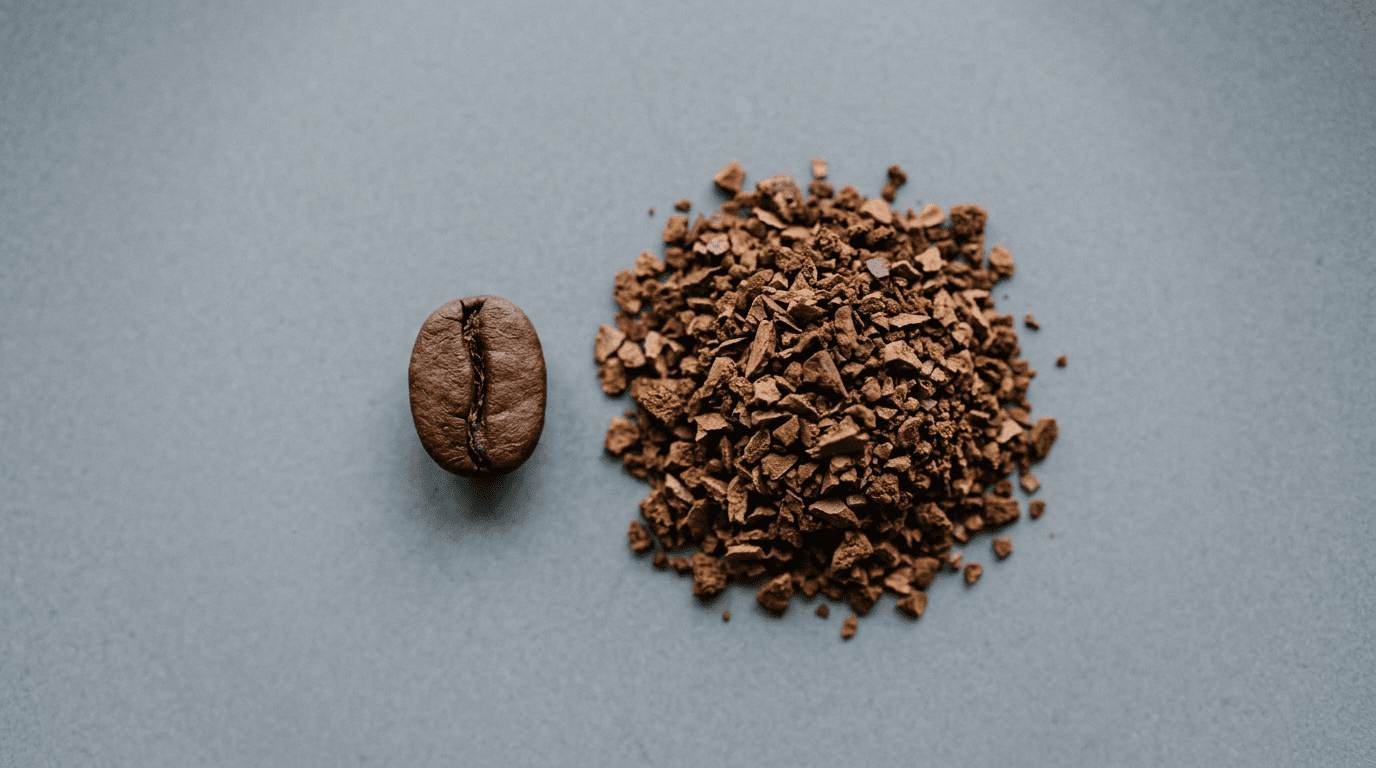
The distinct, bright rush of aromatics that hits you when you first unseal a one-way valve bag rarely survives the week. By day five, folding that same bag over with a paper clip leaves you with flat, woody notes in the cup. This rapid decline is not a flaw in the roasting process, nor does it mean you purchased an inferior batch. It is a strict mechanical reality: the moment you expose coffee grounds to oxygen, a countdown begins. The cellular matrix that previously protected the volatile oils has been shattered, exposing thousands of new surfaces to the air. Saving that flavor requires matching your storage environment to the rate of chemical degradation, and matching your particle size to the specific physics of your brewing method.
Quick Summary
The degradation of coffee grounds is a mechanical process driven by surface area exposure, oxidation, and the rapid outgassing of carbon dioxide. Managing this process requires strictly controlling ambient oxygen, blocking ultraviolet light, and selecting a particle size that aligns perfectly with your extraction time.
- Freshness is determined by the preservation of volatile aromatics, which vanish within hours of exposure to ambient air.
- Vacuum and displacement containers significantly outperform standard sealed tins by actively removing atmospheric oxygen.
- Condensation from improper freezing introduces moisture that permanently alters extraction dynamics.
- Immersion brewing demands larger particles to prevent the over-extraction of bitter tannins over long steeping periods.
- Rapid, high-pressure extraction methods require fine particles to create necessary resistance.
Table of Contents
- Why fresh coffee grounds go stale in under a week
- How oxidation outpaces the standard coffee can
- The freezing trade-off ruins your daily extraction
- Matching grind size to extraction physics limits waste
- What fails first during improper storage
- Who should abandon batch grinding entirely
- FAQ
- Recommended Reads
Why fresh coffee grounds go stale in under a week
The roasting process creates a highly pressurized internal environment within the cellular structure of the seed. Carbon dioxide forms trapped pockets within the cellulose walls, acting as a natural shield that pushes outward, effectively preventing ambient oxygen from entering. When you process that seed into coffee grounds, you physically shatter thousands of these tiny, pressurized vaults. The surface area of the material increases exponentially, and the protective carbon dioxide escapes immediately. This outgassing is what creates the "bloom" when hot water first contacts fresh particles, but it also signals the end of the material's structural defense against the atmosphere.
Without that outward pressure, atmospheric oxygen easily penetrates the exposed cellular fragments. The complex Single Origin aromatics - the volatile compounds responsible for floral, fruity, or bright acidic notes - are the first to evaporate. They do not slowly fade; they literally detach from the physical material and dissipate into the surrounding air. Within twenty-four hours of grinding, up to sixty percent of these volatile aromatic compounds are permanently lost if left on a counter.
Following the loss of aromatics, the lipids (oils) present in the cellular structure begin to cross-link with oxygen. This is a chemical reaction that creates entirely new, undesirable compounds. The stale, cardboard-like taste often associated with old coffee is not simply the absence of good flavor; it is the active presence of oxidized lipids, primarily a compound called 2-nonenal. No brewing technique, regardless of water temperature or agitation, can extract bright flavors from a matrix that has already chemically transformed into oxidized lipids.
How oxidation outpaces the standard coffee can
Most people attempt to halt this degradation by transferring their supply into an airtight container. However, simply preventing new air from entering a vessel does not solve the problem of the air that is already trapped inside. When you pour half a pound of freshly roasted material into a large, rigid tin, you seal it with a significant volume of atmospheric air resting in the headspace above the product.
Because a traditional coffee can is completely static, the oxygen trapped inside the headspace continually reacts with the exposed lipids on the surface of your supply. Every time you open the lid to scoop out a portion for your morning routine, you completely refresh the oxygen supply in that headspace. By the time you reach the bottom third of the container, the material has spent days marinating in a constantly replenished bath of reactive oxygen.
Practical rule: Never store a small amount of product in a large container; the ratio of trapped atmospheric air to organic material dictates how fast the lipids will oxidize.
To actively fight this mechanism, you must remove the headspace entirely. A specialized coffee canister accomplishes this either by using an integrated vacuum pump to pull air out of the vessel after it is sealed, or by utilizing a plunger-style inner lid that pushes down directly onto the surface of the material, displacing the air before the final seal is locked. If you are buying bulk volumes from a collection of All Coffee, utilizing displacement storage is the only mechanical way to halt the steady march of lipid oxidation between your first and last brew of the month.
The freezing trade-off ruins your daily extraction
Freezing organic material slows molecular kinetics, which theoretically slows down oxidation. However, the domestic freezer introduces a physical failure point that often causes more damage than room-temperature staling: condensation. When you pull a cold, sealed jar out of a zero-degree environment and open it in a seventy-degree kitchen, the ambient humidity in the room immediately condenses onto the freezing surfaces of the particles.
This introduction of sudden, localized moisture initiates a premature extraction process on the surface of every particle. The water droplets dissolve the highly soluble fruit acids and delicate sugars, pulling them out of the cellulose matrix. When you return that jar to the freezer, this newly extracted moisture freezes onto the surface, binding the particles together and permanently degrading their chemical potential. When you finally subject them to hot water, the delicate compounds have already been compromised, resulting in a flat, muddy cup profile.
If you must freeze your supply for long-term storage, it must be portioned into single-dose, vacuum-sealed bags. A bag pulled from the freezer must remain completely sealed until it has fully returned to ambient room temperature. Opening a cold vessel guarantees water ingress, and water ingress ruins the careful structural balance created during the roast.
Matching grind size to extraction physics limits waste
The rate at which water dissolves flavor compounds is directly governed by two factors: temperature and exposed surface area. If you mismatch your particle size to your brewing hardware, you will either under-extract (resulting in sour, acidic notes as only the fastest-dissolving compounds wash away) or over-extract (resulting in harsh, astringent bitterness as the water strips the structural tannins out of the cellulose).

Where coarse coffee grounds belong
Immersion brewing methods, such as the French press or traditional cold steeping, trap the water and the organic material together in a single vessel for an extended period. Because the water is allowed to sit and continuously work on the material, you must dramatically slow down the physical extraction rate.
This is why immersion requires coarse coffee grounds. The large, boulder-like particles have relatively little exposed surface area compared to their total mass. The water has to work slowly to penetrate the outer layers and reach the core of the particle. If you use small particles in a French press, the four-minute steeping time will completely hollow out the material, extracting the bitter, woody structures that should have been left behind.
When preparing Cold Brew Coffee, this mechanical principle is stretched to its absolute limit. Cold water has very low kinetic energy, meaning it dissolves compounds extremely slowly. To compensate, the steep time is extended to twelve or even twenty-four hours. For this specific method, utilizing coarse ground coffee for cold brew is mandatory. The extended contact time requires the thickest possible cellular walls to prevent the cold water from eventually pulling out the harsh, astringent tannins that ruin the smooth, sweet profile of a slow extraction.
When to push toward a fine coffee powder
Conversely, percolation methods that push water rapidly through a densely packed bed require maximum surface area to extract anything at all. In an espresso machine, water is forced through the material at nine bars of pressure in roughly thirty seconds. If you use large particles, the high-pressure water will simply find the path of least resistance, channeling through the gaps between the boulders and resulting in a thin, sour, watery liquid.
To force the water to work for its passage, you must use a fine coffee powder. This tightly packed, sand-like texture creates a dense physical barrier. The water must push against the bed, building up pressure before it uniformly penetrates the microscopic fragments, dissolving the dense, heavy oils and complex sugars in a matter of seconds.
What fails first during improper storage
Understanding how different environmental factors degrade your supply allows you to prioritize your storage solutions. A complex, multi-origin profile like a 6 Bean Blend relies on a delicate balance of heavy base notes and bright, volatile top notes. When storage fails, that carefully crafted balance falls apart in a very predictable sequence.
The degradation timeline always follows the same mechanical path: aromatics detach first, lipids oxidize second, and structural moisture evaporates third.
| Degradation Vector | Mechanism of Failure | Time to Noticeable Defect | Primary Symptom in the Cup |
|---|---|---|---|
| Oxygen Exposure | Cross-links with surface lipids to form 2-nonenal. | 3 to 5 days | Cardboard, flat, or distinctly rancid flavors replacing sweetness. |
| UV Light Ingress | Photochemical breakdown of organic cell walls. | 7 to 10 days | Harsh, generic bitterness masking origin characteristics. |
| Temperature Fluctuations | Forces continuous outgassing and localized condensation. | 2 to 3 days | Total loss of bloom during hot water extraction; muddy profile. |
| Excess Headspace | Traps atmospheric air against the organic material. | 5 to 7 days | Muted acidity and loss of floral/fruity aromatics. |
Practical rule: If your storage solution is transparent, it must live inside a dark cabinet; ultraviolet light will chemically degrade the structure just as effectively as ambient oxygen.
Who should abandon batch grinding entirely
Pre-processing an entire week's worth of material on Sunday evening is a logistical choice that entirely sacrifices the chemical integrity of the extraction. If your morning routine relies on a heavy, milk-based drink where the primary flavor notes are sugar and dairy, you can likely tolerate the oxidative loss. The fat in the milk will mask the cardboard notes of stale lipids.
However, if you drink pour-over, espresso, or strictly black drip, batch processing is ruining your investment. The delicate fruit acids, floral aromatics, and clean finishes that define high-end processing simply cannot survive twenty-four hours outside their protective cellulose matrix. For these applications, you must keep your supply stored strictly as whole coffee beans until the exact minute the water reaches its boiling point. If the hassle of a daily routine feels overwhelming, pivot your purchasing strategy. Instead of buying bulk bags that sit open for weeks, utilize Sample Packs to cycle through small, tightly sealed, fully intact volumes that never have the chance to oxidize before you finish them.
FAQ
How long can I leave ground material out before it goes stale? The volatile aromatics begin dissipating within minutes, and significant oxidative staling occurs within twenty-four hours. For optimal extraction, the material should meet hot water no more than fifteen minutes after being processed.
Does a dark roast degrade faster than a light roast? Yes. Dark roasting subjects the cellular structure to more heat, making it highly porous and pushing the natural lipids to the surface. Because these oils are already exposed on the outside of the particle, they oxidize much faster than the internally trapped oils of a denser, lighter roast.
Why does my French press taste muddy and bitter? This is a mechanical failure caused by using particles that are too small. When fine particles are steeped for four minutes, the water extracts past the sweet sugars and begins dissolving the harsh, bitter tannins deep within the cellulose. You must switch to a much larger, coarser particle size.
Can I store my daily supply in the refrigerator? No. The refrigerator is the worst possible environment. It is highly humid and full of ambient food odors. The organic cellular structure is incredibly porous and will rapidly absorb both the moisture and the smell of whatever else is stored on the shelf next to it.