Top 5 Choices for Coffee Decaffeinated Beans, Pods, and Instant Blends
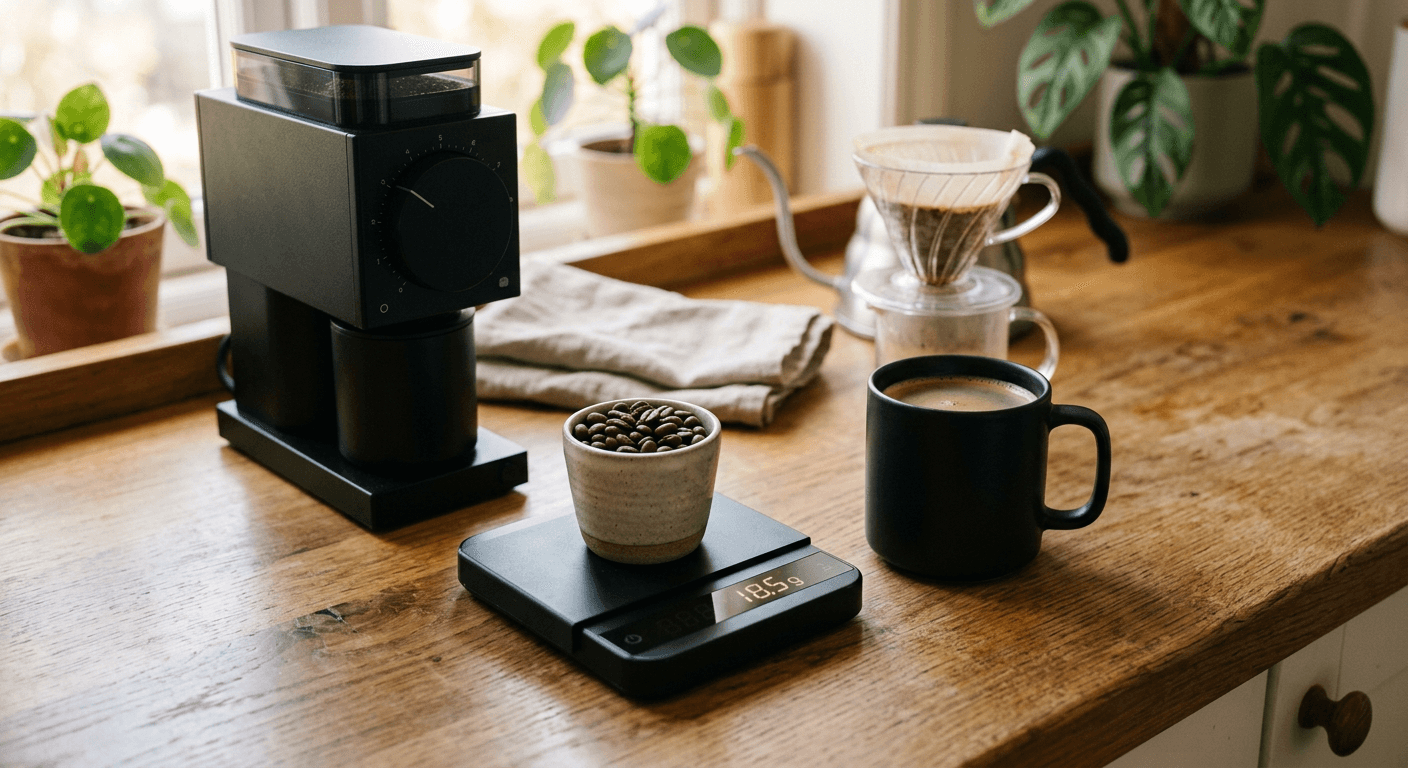
You reach for the kettle at 7 PM. You want the roast profile, the ritual, and the warmth, but pouring a standard cup means staring at the ceiling until 3 AM. Finding coffee decaffeinated beans that actually retain their structural integrity through processing is notoriously difficult. The decaffeination process strips out more than just the stimulant; it often damages the cellular matrix of the bean, taking the volatile aromatics with it. We are looking at the mechanical realities of brewing decaf across different formats, from raw materials requiring full manual extraction to soluble granules designed for immediate hydration, and exploring exactly what you trade away for convenience at each step.
Quick Summary
Decaffeinated coffee serves drinkers who require the sensory experience of a roast without the physiological impact of caffeine. Selecting the right option depends entirely on whether you prioritize the cellular integrity of whole beans, the rapid hydration of instant granules, or the mechanical convenience of pods.
- The decaffeination process stresses the bean structure, making format selection critical for cup quality.
- Whole bean options require precision equipment to properly extract remaining aromatics.
- Soluble granules trade sensory depth for absolute stability and speed.
- Pre-dosed pods lock you into fixed extraction ratios that cannot be adjusted.
Table of Contents
- Evaluating the extraction and format constraints
- 1. Purity Coffee CALM
- 2. Community Coffee Café Special Decaf Instant Coffee
- 3. Folgers Classic Decaf Instant Coffee
- 4. Peet's Decaf Especial K-Cup Pods
- 5. Dunkin' Decaf Medium Roast Coffee K-Cup Pods
- Matching preparation constraints to your daily routine
- Recommended Reads
Evaluating the extraction and format constraints
The primary lens for separating these options is the Format and Preparation Method. This axis determines exactly how much control you have over the final beverage and dictates what equipment you must maintain on your counter.
The Whole Bean category demands the most from the brewer. You are purchasing a raw ingredient that requires a burr grinder, a precise scale, and deliberate technique. In exchange, this format retains the highest volume of intact aromatic compounds, giving you total control over the extraction yield and the ability to pull nuanced flavors out of specific Single Origin harvests.
The Instant category removes extraction from the home entirely. The manufacturer brews the coffee at an industrial scale and dehydrates the resulting liquid into soluble solids. You simply add hot water to rehydrate it. While this eliminates all hardware requirements, the severe thermal processing flashes off delicate floral and fruity notes, leaving a structurally flat profile.
The Single-Serve Pods category sits between manual labor and instant solubility. It offers mechanical extraction through a pre-dosed, sealed capsule. The machine controls the water temperature and pressure, ensuring repeatable baseline results. However, you surrender all ability to adjust the dose or contact time, meaning you cannot fix a cup that pours too weak or too bitter.
Practical rule: Never buy whole beans unless you own a conical or flat burr grinder; blade grinders shatter the brittle decaffeinated cellular structure into inconsistent dust, guaranteeing a sour and over-extracted cup.
| Product | Format and Preparation Method | Features | Pros | Cons | Target Audience |
|---|---|---|---|---|---|
| Purity Coffee CALM | Whole Bean | Organic, Arabica | High aromatics, Grind control, Sourcing transparency | Equipment heavy, Time intensive, Requires technique | Precision home brewers |
| Community Coffee Café Special | Instant | Medium-dark roast | Immediate yield, Shelf stable, No gear needed | Loss of subtle notes, Flat texture, Pre-extracted | Travelers and minimalists |
| Folgers Classic Decaf | Instant | 99.7% caffeine-free | Standardized output, Rapid solubility, Consistent | Thin mouthfeel, Industrial profile, No origin traits | High-volume environments |
| Peet's Decaf Especial | Single-Serve Pods | K-Cup compatible | Mess-free, Rapid prep, Sealed freshness | Fixed ratio, Pod waste, Machine dependent | Busy office settings |
| Dunkin' Decaf Medium Roast | Single-Serve Pods | Retail replication | Familiar profile, Fast execution, Low viscosity | Cannot updose, Light body, Fast oxidation post-brew | Casual morning drinkers |
1. Purity Coffee CALM
According to its published specifications, Purity Coffee CALM is a regenerative organic shade-grown medium roast decaf coffee made from 100% Arabica beans. It operates as a raw ingredient requiring full mechanical intervention from the user, placing it firmly in the Whole Bean category.
Because it uses 100% Arabica beans cultivated under canopy shade, the seed builds a higher physical density. This happens before it enters the decaffeination bath. This structural density allows the cellular matrix to hold onto its organic acids far better than softer, fast-growing sun varieties. Run this through a burr set. You actively release trapped carbon dioxide and aromatics that successfully survived the decaffeination phase. This retention makes the bean highly suitable for long, slow-steeping applications like a highly controlled decaf cold brew coffee setup, where intact cellular walls are necessary for a clean yield.
Cellular density dictates the grind requirement
The barrier here is entirely based on your kitchen equipment. If your grinder produces inconsistent boulders and fines, or if you lack a precise scale to measure your dose, the structural advantages of these organic whole beans are wasted entirely in the filter basket. You will end up with highly astringent, unevenly extracted water, making it a poor choice for anyone who rushes through morning prep.
We would choose this format if you already maintain high-end brewing hardware and view your beverage preparation as a deliberate mechanical process.
Pros
- Retains high levels of volatile aromatics
- Permits total control over the extraction yield
- Uses shade-grown 100% Arabica for structural density
Cons
- Demands expensive grinding hardware
- Requires precise scale measurements
- Fails entirely if technique is rushed
2. Community Coffee Café Special Decaf Instant Coffee
Moving away from scales, burrs, and lengthy manual rituals, this approach relies on immediate thermal hydration. Community Coffee Café Special Decaf Instant Coffee acts as a shelf-stable, rapid-yield solution within the Instant category for environments where standard brewing hardware simply does not exist.
Formulated as a medium-dark roast instant decaffeinated coffee made from 100% Arabica beans, the mechanism relies on the manufacturer executing the extraction first. The resulting concentrated liquid is then dehydrated - typically via spray or freeze-drying chambers - into soluble granules. Pushing the roast level toward the medium-dark spectrum is a deliberate mechanical choice by the roaster. Darker roasting creates heavier, caramelized sugar compounds that survive the violent dehydration process far better than the subtle, fragile acids found in light roasts.
Caramelized compounds survive dehydration
The intense industrial processing guarantees that the liquid loses the vast majority of its volatile aromatic compounds. While it delivers a dark roast decaffeinated coffee profile heavily weighted toward generic bitter-sweetness, anyone looking to identify distinct origin characteristics or bright acidity will find the cup completely flat. You cannot tweak the extraction because the extraction happened months ago in a factory.
We would keep this securely stocked in a travel bag or desk drawer for situations where hot water from a kettle is the only available resource.
Pros
- Hydrates immediately upon contact with water
- Survives long-term storage without staling
- Eliminates all needs for filters or brewers
Cons
- Lacks all subtle floral and fruity notes
- Pre-determined extraction limits adjustments
- Presents a fundamentally flat mouthfeel
3. Folgers Classic Decaf Instant Coffee
A night-shift dispatcher reaches into the breakroom cabinet, fills a mug with hot water from the industrial cooler, and stirs in a spoonful of granules. Folgers Classic Decaf Instant Coffee is the defining legacy product of the Instant category, engineered to deliver a uniform cup regardless of the user's technical skill.
The underlying mechanism of this instant decaffeinated medium roast coffee relies on extreme standardization. The decaffeination process strips out the alkaloid structure until only a fractional trace remains in the bean matrix. The subsequent mass-scale brewing and flash-drying phases lock in a specific medium roast profile that dissolves immediately, yielding a completely predictable total dissolved solids reading every single time. When looking across All Coffee formats, this represents the highest level of mechanical predictability available.
Industrial dehydration standardizes the final cup
That uncompromising consistency is precisely its ceiling. Because it is optimized for mass appeal and rapid solubility, the texture is exceptionally thin. It tastes broadly like "coffee" but lacks any structural complexity; when comparing this against a Best Sellers Sample Pack: 6Bean, Cowboy, Breakfast, Peru, Mexico, Bali brewed fresh, the sensory difference in viscosity and finish is stark.
We would avoid relying on this format if heavy texture matters to your palate, reserving it strictly for scenarios requiring instant coffee caffeine free convenience over sensory depth.
Pros
- Achieves a verified 99.7% caffeine-free metric
- Delivers absolute consistency cup after cup
- Requires zero technical skill to prepare
Cons
- Produces an exceptionally thin liquid texture
- Strips away all distinct origin flavor markers
- Relies on generic roasted notes
4. Peet's Decaf Especial K-Cup Pods
The primary bottleneck this format removes is the massive variance in human technique during a rushed morning prep. Peet's Decaf Especial K-Cup Pods delivers a single, measured dose of pre-ground coffee locked inside a sealed mechanical chamber, utilizing the Single-Serve Pods category to automate the extraction.
The brand markets this medium roast decaffeinated coffee blend in single-serve pods compatible with Keurig brewers. The extraction relies entirely on the machine's internal pump. Hollow needles puncture the foil seal. Pressurized hot water is forced aggressively through the tightly packed puck. The foil barrier prevents the vulnerable decaf grounds from oxidizing as rapidly as they would in an open bag. This preserves a baseline level of freshness until the exact moment the machine engages the puncture mechanism.
Fixed geometry governs the extraction yield
You are entirely trapped by the fixed geometry of the pod architecture. If the resulting cup tastes hollow or under-extracted, you cannot updose the basket with more coffee, nor can you tighten the grind size to slow the water down. Your only available recourse is to program the machine to push less water through the capsule, which results in a smaller total beverage volume.
We would deploy this specific setup in shared communal spaces where speed is the dominant requirement and physical cleanup must be kept to zero.
Pros
- Automates the extraction pressure and temperature
- Prevents rapid oxidation via sealed foil barriers
- Eliminates messy grounds from the brewing area
Cons
- Prevents the user from adjusting the coffee dose
- Generates ongoing plastic waste per serving
- Limits the ability to fix under-extracted cups
5. Dunkin' Decaf Medium Roast Coffee K-Cup Pods
A sudden office mandate replacing the reliable batch drip brewer with a pod machine sends teams scrambling to find familiar, unchallenging flavor profiles. Dunkin' Decaf Medium Roast Coffee K-Cup Pods translates a high-volume retail cafe profile into a home-compatible mechanical format within the Single-Serve Pods category.
Packaged as a medium roast decaffeinated coffee blend in Keurig-compatible K-Cup pods, the formulation aims to closely mimic a standard breakfast blend decaf coffee. The roaster calibrates the particle size inside the pod to extract optimally at the exact temperature range hardcoded into commercial and home Keurig machines. This engineering ensures that the water contact time - which is usually less than sixty seconds - pulls just enough soluble material to match the brand's expected output before you brew it directly into an Enamel Mug for the commute.
Machine temperature parameters limit extraction depth
The rapid pump extraction fundamentally struggles with medium roasts, which typically require slightly longer contact time to develop a heavy body. The resulting beverage is invariably lighter and more tea-like than a cup brewed slowly through a standard paper filter. It serves a specific palate, but anyone expecting a syrupy, lingering finish will be disappointed.
We would select this option if you prefer a very mild, low-viscosity cup that clears quickly from the palate.
Pros
- Replicates a recognizable retail flavor profile
- Calibrates precisely to standard machine temperatures
- Extracts fully in under sixty seconds
Cons
- Fails to develop a heavy or syrupy body
- Restricts water contact time severely
- Creates a highly volatile, tea-like consistency
Matching preparation constraints to your daily routine
If your primary constraint is the loss of flavor complexity and you already own precision hardware, the Whole Bean category is your only viable path. Buying raw, unground decaf allows you to manage the extraction yield yourself. You can grind finer to push extraction or coarser to back off astringency, ensuring the structural damage done during the decaffeination process does not ruin the final cup.
If you lack a burr grinder, a scale, and a dedicated brewer, the Instant category trades aromatic depth for sheer utility. This is the choice for hotel rooms, desk drawers, and camping bags. You sacrifice the nuanced origin characteristics, but you gain absolute shelf stability and a guaranteed result the moment water hits the cup. For drinkers who want a hot beverage without any mechanical friction, some drinkers abandon coffee entirely for Tea later in the day, but instant decaf fills the coffee void instantly.
If you value mechanical repetition over custom dialing, the Single-Serve Pods category removes human error from the equation. It suits environments where multiple people brew their own cups sequentially and refuse to clean up grounds. You accept the fixed dose and the environmental footprint in exchange for speed and baseline consistency.