The Best Coffee to Make Cold Brew and Ready-to-Drink Cans in 2026
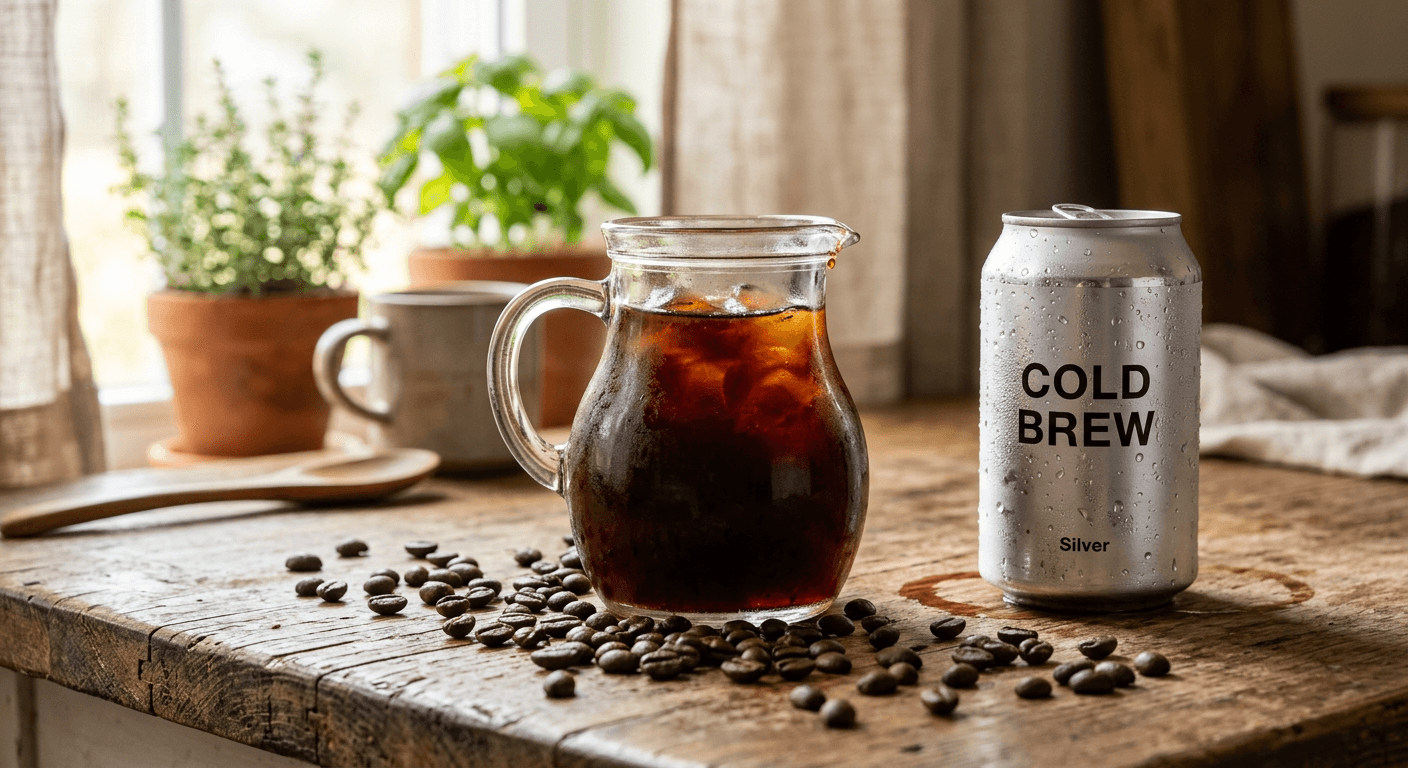
You walk into the kitchen at 6 AM, open the fridge, and realize you forgot to start the steep the night before. Suddenly, finding the best coffee to make cold brew from scratch feels less urgent than grabbing a pre-made can that delivers the exact same profile without the 12-hour wait. The modern cold extraction market forces a constant trade-off between the convenience of immediate caffeine and the economic efficiency of brewing it yourself.
Quick Summary
Cold brew coffee relies on extended time rather than heat to extract flavor compounds, resulting in a low-acid, highly caffeinated beverage. The market spans from whole beans meant for home extraction to pre-steeped formats ready for immediate consumption, requiring buyers to weigh upfront preparation time against unit cost.
- Preparation formats dictate cost per ounce more than bean origin.
- Ready-to-drink options offer precise, consistent caffeine dosing.
- Liquid concentrates bridge the gap between convenience and volume yield.
- Home brewing provides the highest degree of extraction control.
Table of Contents
- Buying Guide: How to Choose
- 1. Starbucks Nitro Cold Brew
- 2. illy Cold Brew Classico
- 3. Barissimo Cold Brew Coffee
- 4. Chameleon Organic Cold Brew Coffee
- 5. Stone Street Cold Brew Reserve
- Matching Formats to Daily Routines
- Recommended Reads
| Product | Preparation Format | Features | Pros | Cons | Target Audience |
|---|---|---|---|---|---|
| Starbucks Nitro | Ready-to-Drink Cans | 20-hour steep, nitrogen infused | Creamy texture, widely available, low calorie | Rapid dissipation, high cost per unit, strict temperature needs | Grab-and-go commuters |
| illy Classico | Ready-to-Drink Cans | 12-hour steep, 100% Arabica | High caffeine density, robust flavor, subscription discounts | Bitter edge, difficult to dose down, small volume | Heavy caffeine consumers |
| Barissimo | Ready-to-Drink Cans | Aldi private label, multiple formats | Lowest entry price, format variety, widely accessible | Inconsistent caffeine across flavors, opaque sourcing, basic flavor | Budget-focused volume drinkers |
| Chameleon Organic | Liquid Concentrates | 11+ hour steep, Texas hill water | High yield per bottle, customizable strength, organic certification | Requires manual mixing, needs refrigeration, lacks instant utility | Office fridge stockers |
| Stone Street Reserve | Whole Bean/Ground | 100% Arabica 'supremo' from Colombia | Lowest cost per ounce, maximum extraction control, deep flavor | Demands 24-hour foresight, requires hardware, manual cleanup | Dedicated home brewers |
Buying Guide: How to Choose
The defining metric for evaluating chilled extraction products is the Preparation Format. This axis separates how much labor the manufacturer has done versus how much is left to the consumer, dictating both the final price and the flexibility of the beverage.
The first category is Ready-to-Drink Cans. These are fully processed, sealed, and carbonated or nitrogenated at the facility. They offer zero prep time and strict portion control, making them ideal for commuting. However, you pay a premium for the aluminum, the water weight in shipping, and the convenience.
The second category is Liquid Concentrates. Manufacturers steep the coffee at a high ratio to create a dense, highly caffeinated syrup. This format removes the overnight waiting period but still requires the user to mix the product with water or milk at the point of consumption, offering a middle ground in price and labor.
The final category is Whole Bean/Ground. This requires the buyer to manage the entire extraction process, from grinding to filtering. While it yields the lowest cost per cup and allows total control over the roast profile, it demands dedicated hardware and strict foresight to maintain a daily supply.
1. Starbucks Nitro Cold Brew
Reaching into a cooler for a nitrogen-infused drink usually requires a commercial tap system, but this product packages that specific mouthfeel into a retail aluminum shell. Starbucks nitro cold brew coffee serves the commuter who prioritizes immediate textural satisfaction over single-origin clarity. Belonging to the Ready-to-Drink Cans category, this option isolates the buyer from any brewing hardware or dilution math.
The mechanics rely on infusing the liquid with nitrogen gas right before sealing. Unlike carbon dioxide, which creates large bubbles and carbonic acid, nitrogen creates microscopic bubbles that do not alter the pH of the coffee. According to its published specifications, Starbucks Cold Brew is slow-steeped in cool water for 20 hours prior to this gas infusion. This extended extraction pulls out heavy, chocolate-leaning solubles while leaving behind the volatile acids that a hot brew would release. The result is a surprisingly viscous liquid; a single 9.6 fl oz can of the Premium Unsweetened Black version manages to deliver a creamy sensation despite containing only 10 calories and 1g of protein.
Nitrogen infusion masks the lack of fresh acidity
I would hesitate to deploy this as an all-day sipping beverage. The widget-free can design means the physical effect of the gas is entirely dependent on a pressurized seal. Once you crack the tab, the nitrogen begins escaping into the atmosphere immediately. The heavy texture that defines the product vanishes within twenty minutes, leaving a flat, somewhat hollow-tasting liquid behind. It demands immediate, rapid consumption directly from the fridge.
An 8-pack of 9.6 fl oz cans of the black unsweetened variant is priced at $26.99 at Walmart, while a single can of the Vanilla Sweet Cream version sits at $3.49 at Target.
Pick this up when a smooth, milk-free texture is the primary requirement for your morning drive.
Pros
- Replicates draft texture without commercial equipment
- Low caloric footprint for the perceived creaminess
- Consistent national availability
Cons
- Texture degrades rapidly after opening
- High cost per ounce compared to traditional steeps
- Requires strict temperature control to maintain the gas suspension
2. illy Cold Brew Classico
Where other brands lean heavily on dairy additions or gas treatments to soften the profile, illy leans on its established European roasting heritage to maintain a traditional espresso-like backbone in a chilled format. This option is engineered for the buyer seeking a sharp, concentrated caffeine hit rather than a gentle morning beverage. Operating within the Ready-to-Drink Cans category, it sidesteps the wait time entirely while retaining the heavy body of a dark roast.
The product is built around a 100% Arabica blend that undergoes a relatively short cold water extraction. The beverage is cold brewed for exactly 12 hours. By stopping the steep at the half-day mark, the manufacturer prevents the over-extraction of bitter tannins that often plague 24-hour commercial batches. This precise window results in an incredibly dense liquid. A single 8.45 fl oz can yields an aggressive 190mg of caffeine while registering just 5 calories.
A compressed steep time yields a sharper profile
The honest limitation of this approach is its inflexibility regarding stimulation. The 190mg caffeine payload packed into an 8.45-ounce serving is highly concentrated; if you are sensitive to caffeine or looking for a mid-afternoon refreshment, there is no practical way to dose this down without ruining the intended flavor profile. It is a blunt instrument designed for heavy tolerance.
For regular consumers, an active illy coffee subscription offers 20% off and free shipping on recurring orders. Retail pricing positions a 12-pack of the Cappuccino flavor at $52.99 at Walmart.
Select this option if your tolerance demands maximum caffeine density in the smallest possible physical footprint.
Pros
- Extremely high caffeine-to-volume ratio
- Shorter steep time prevents woody, over-extracted notes
- Subscription model significantly reduces recurring costs
Cons
- Unforgiving strength for casual drinkers
- Small can size feels insufficient for extended sipping
- Base profile leans heavily into bitter chocolate rather than bright fruit
3. Barissimo Cold Brew Coffee
Why pay the premium markup associated with national marketing budgets? Private labels exist to remove that expense, and Aldi's house brand executes this efficiently for the chilled beverage sector. Barissimo cold brew coffee targets the budget-conscious volume drinker who values basic caffeination over regional traceability. While they offer items across multiple formats, their line of Ready-to-Drink Cans allows buyers to stock their pantries at a fraction of the standard retail cost.
The mechanism here is aggressive supply chain management rather than proprietary brewing technology. Aldi provides multiple entry points: an 8-ounce ready-to-drink can costs just $2.19, a larger 48-ounce container of iced coffee sits at $4.99, and a 12-ounce bag of ground coffee is priced at $5.99. However, the pre-made cans rely on heavy dilution. The liquid in the flavored variants displaces actual coffee volume with additives to maintain shelf stability and mask lower-tier bean sourcing.
Practical rule: When evaluating private label beverages, check the caffeine content across different flavors; dairy and sugar additions often physically replace the coffee concentrate rather than just flavoring it.
Aggressive pricing requires careful label reading
What would make me hesitate to recommend the entire line is the drastic variance in stimulant levels. Because of the volume displacement mechanism, the unsweetened canned version contains 149 mg of caffeine per serving, while the vanilla cream version drops to a mere 87 mg of caffeine. If you switch between flavors assuming a consistent morning kick, the flavored variants will leave you significantly under-caffeinated. You are sacrificing predictability for price.
Choose these private-label cans when budget strictness outweighs the need for a complex tasting experience.
Pros
- Lowest barrier to entry per unit
- Multiple format options under one brand
- Accessible at standard grocery checkout speeds
Cons
- Wildly inconsistent caffeine levels between flavors
- Opaque bean sourcing and roasting dates
- Flavored variants lean heavily on synthetic sweetness
4. Chameleon Organic Cold Brew Coffee
Steeping the base for 11 or more hours using fresh Texas hill water extracts a potent profile, positioning Chameleon as a craft alternative that survived the jump to national distribution. This option speaks to the office manager or home worker who wants a customizable morning routine without waiting for a full overnight steep. These Liquid Concentrates bridge the gap between raw ingredients and finished beverages by shipping the steep but leaving the dilution to you.
The core mechanism is high-ratio brewing. By restricting the water volume during the 11-hour steeping phase, the manufacturer produces a dense, viscous syrup packed with soluble organic material. This concentrate is physically stable enough to sit on a shelf without losing its volatile aromatics. Every 32 oz bottle of the concentrate makes up to 64 oz of brewed coffee once properly mixed.
Manual dilution shifts texture control back to the buyer
Because this format relies entirely on external resources, concentrates lack the instant grab-and-go utility of a sealed aluminum can. To drink it, you need a glass, ice, and access to clean water or milk. If you pour it directly into a travel enamel camp mug without measuring the dilution ratio, the resulting astringency will overwhelm your palate.
Direct pricing places a 10 oz ready-to-drink Mexican Cold-Brew bottle at a regular price of $3.99 on the brand's website, while a 48 oz bottle of the Black Coffee Concentrate is priced at $11.99 at Lowes Foods.
Stock this concentrate in your refrigerator when you want precise control over the strength of your drink without dealing with wet coffee grounds.
Pros
- High volume yield from a single purchase
- Allows exact control over beverage strength
- Organic certification ensures baseline agricultural standards
Cons
- Useless in transit without prior preparation
- Requires purchasing separate milk or water for mixing
- Dark color makes visual dilution judging difficult
5. Stone Street Cold Brew Reserve
While bottled concentrates offer immediate convenience, their weekly expense eventually drives daily drinkers to seek out their own raw materials. Stone Street is engineered for the dedicated enthusiast who has grown tired of paying a premium for factory water and is ready to manage the extraction process themselves. Buying Whole Bean/Ground coffee demands extra labor and hardware, but it rewards that effort with the lowest cost per ounce and the freshest possible yield.
The extraction mechanics of home brewing rely entirely on grind uniformity and roast structure. This blend features 100% Arabica 'supremo' coffee beans sourced from Colombia, subjected to a dark roast. Cold water struggles to dissolve the bright, acidic compounds found in light roasts. By pushing these beans deeper into the roasting cycle, the manufacturer breaks down the cellular structure of the bean, creating highly soluble sugars that extract easily in room-temperature water.
Roast profile optimization prevents sour extraction
I would hold off on this approach if your mornings are chaotic. Whole-bean preparation strictly demands 24-hour foresight. If you forget to load your pitcher and initiate the steep on Tuesday night, you have zero coffee on Wednesday morning. It also requires you to invest in a dedicated steeping vessel and navigate specialty-grade coffee cleanup, making it a poor fit for someone accustomed to throwing a can in the recycling bin.
A one-pound bag of the Caramel Nut flavor regularly retails for $19.00, while the unflavored Reserve blend on the official storefront starts at $19.00 and carries over 201 reviews.
Commit to this whole bean bag when you have the discipline to maintain a nightly routine and the desire to maximize your grocery budget.
Pros
- Dramatically lowers the cost per cup
- Dark roast profile guarantees easy cold extraction
- Allows experimentation with varying steep times
Cons
- Requires external brewing hardware
- Demands strict overnight preparation discipline
- Disposal of wet grounds adds labor to the morning routine
Matching Formats to Daily Routines
The decision ultimately hinges on where your bottleneck lies: your budget, your schedule, or your palate.
For consumers whose primary constraint is time, Ready-to-Drink Cans are the only logical choice. Starbucks provides textural complexity on the road, illy delivers a massive caffeine spike in a tiny footprint, and Barissimo caters to buyers who need pre-packaged volume on a strict grocery budget. You pay entirely for the labor the factory performed.
If you have thirty seconds to spare in the kitchen but lack the patience for overnight steeping, Liquid Concentrates solve the problem. Chameleon allows you to dial in your exact preferred strength, provided you have access to water and ice, making it the superior choice for a static office environment.
When cost efficiency and ultimate flavor control are the goals, you must migrate to the Whole Bean/Ground category. Stone Street provides the raw robust coffee blends necessary for successful home extraction, rewarding those willing to build a nightly prep routine with the best possible margin per cup.