4 Local Coffee Shops and Roasters Setting the Specialty Standard in 2026
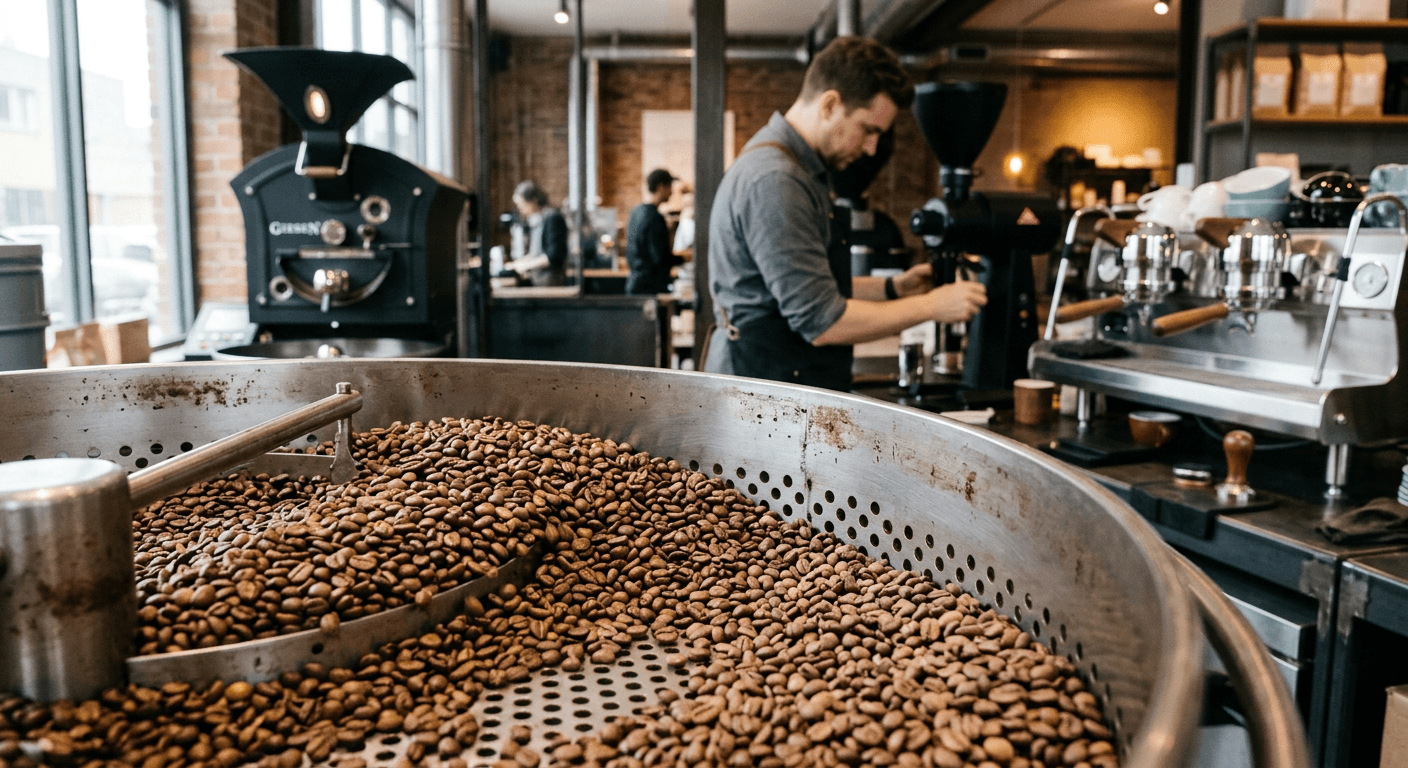
Buyers routinely assume that evaluating local coffee shops means judging their espresso machines and latte art, missing the structural reality of how the beans actually reach the hopper. A beautifully extracted shot fails immediately if the green coffee sourcing and roasting infrastructure behind it are compromised. The real differentiation happens entirely in the supply chain, where roasting schedules, shipping logistics, and batch sizes dictate exactly how fresh a coffee is when it finally rests on the bar. Selecting a supplier requires understanding whether their operational scale actually aligns with your daily consumption rates and extraction hardware.
Quick Summary
Evaluating specialty sourcing requires looking past the cafe aesthetic to examine roasting schedules, shipping networks, and wholesale minimums. The mechanics of delivering fresh, high-extraction beans differ wildly between a regional micro-roaster and a national distribution network.
- Roast-to-ship intervals determine peak freshness upon delivery.
- Bag sizing alters the operational cost per ounce significantly.
- Subscription models range from curated exploration to high-volume commercial supply.
- Courier logistics dictate whether a coffee arrives safely resting or prematurely aged.
Table of Contents
- Comparison Table
- How to Choose a Supply Model
- 1. Onyx Coffee Lab
- 2. Sey Coffee
- 3. Counter Culture Coffee
- 4. Blue Bottle Coffee
- Matching Supply to Daily Consumption
- Recommended Reads
Comparison Table
| Product | Commercial Focus | Features | Pros | Cons | Target Audience |
|---|---|---|---|---|---|
| Onyx Coffee Lab | Micro-Lot Curation | Tuesday shipping, split subscriptions, 10oz sizing | Exacting roast schedules, complex flavor profiles, distinct packaging | Rigid dispatch days, high per-ounce cost, strict resting requirements | High-end venues prioritizing presentation |
| Sey Coffee | Micro-Lot Curation | 250g packaging, extreme light roasting, transparent sourcing | High-clarity extractions, free domestic subscription shipping, farm-level transparency | Gram-based sizing limits volume, demands high-end flat burr grinders, poor milk integration | Extraction purists and modern micro-cafes |
| Counter Culture Coffee | Wholesale and Office Volume | 5lb bulk bags, Surepost shipping, wide distribution | Cost-effective scaling, reliable year-round profiles, manageable rest periods | Final-mile delivery variance, lacks hyper-experimental lots, broad homogenization | High-traffic operations and commercial offices |
| Blue Bottle Coffee | Retail Cafe Operator | Standardized brewing, centralized logistics, cafe network | Uniform global profiles, scalable training protocols, immediate brand recognition | Menu homogenization, inflexible corporate sourcing, no neighborhood exclusivity | Broad consumer demographics seeking consistency |
How to Choose a Supply Model
The structural divide separating any specialty coffee shop comes down to its Commercial Focus. Sourcing operations generally fall into one of three distinct categories that dictate how they buy, roast, and ship their inventory.
Micro-Lot Curation focuses on securing highly exclusive, limited-yield coffees from specific farm plots. These operations prioritize extreme flavor clarity and experimental processing methods over year-round consistency. When examining a Single Origin catalog under this model, buyers must accept seasonal rotation and frequent dial-in adjustments, as the coffee changes completely every few weeks.
Wholesale and Office Volume operators tackle the opposite problem. They buy green coffee in massive tonnage to engineer stable, predictable blends that taste identical in December as they do in July. This category prioritizes logistical efficiency, bulk packaging, and extraction stability, making it the backbone of heavy commercial environments.
Retail Cafe Operator models sit at the intersection of scale and specialty. These are sprawling networks that centralize their roasting to supply hundreds of their own storefronts. They focus heavily on standardized extraction protocols, ensuring a barista in one city pulls a shot identical to a barista in another, effectively eliminating the operational variance found in independent shops.
Practical rule: Always calculate supply costs by the brewed ounce rather than the packaged bag to accurately compare micro-roasters against bulk volume suppliers.
1. Onyx Coffee Lab
Onyx Coffee Lab replaces the standard commodity warehouse roasting operation with a precision-focused model rooted in Arkansas, designed for venues demanding absolute control over flavor clarity and presentation.
This supplier enforces strict batching and fulfillment protocols. They avoid roasting continuously throughout the week. According to their published logistics, the company processes and ships subscription orders entirely on Tuesdays. This creates a strict 24-hour dispatch window following processing. A buyer can secure a 'Happy but looking' subscription for $70. It pairs one 2lb bag of Southern Weather with one 10oz box of rotating single origins. Or, opt for a 3-month Roasters Choice gift subscription at $85 with shipping included. They operate heavily in the Micro-Lot Curation category. Their approach forces buyers to align post-roast resting times specifically with that Tuesday dispatch window. This requires careful inventory math. It ensures the beans are adequately degassed before grinding.
Consolidation of roasting days creates logistical choke points
The constraint emerges clearly in the bag sizes and the rigid dispatch calendar. A single retail bag of their Southern Weather blend commands $21.50 but only yields 10 ounces of coffee. A busy coffee roasters cafe will burn through 10 ounces in roughly fourteen double shots, meaning a minor spike in weekend foot traffic can easily wipe out a reserve supply. We would hold off on this model if daily espresso volume exceeds the predictability of a weekly Tuesday shipment, as running out on a Friday leaves a business entirely stranded until the following Wednesday. Instead of committing blindly to tight margins, some buyers prefer testing broader flavor profiles through a Best Sellers Sample Pack: 6Bean, Cowboy, Breakfast, Peru, Mexico, Bali to understand what their demographic actually orders before locking into rigid, high-cost boutique supply lines.
Secure this supply chain when consumer willingness to pay justifies the steep price-per-ounce and the operation can manage strict resting calendars.
Pros
- Exacting, highly predictable roasting schedules
- Unique split-subscription models for blend and single-origin variety
- Exceptionally high flavor clarity suited for modern espresso
Cons
- 10-ounce retail bags inflate the actual cost per ounce
- Tuesday-only subscription shipping creates inventory bottlenecks
- High acidity profiles require advanced dial-in capabilities
2. Sey Coffee
Where Onyx leans into heavily branded, split-format subscriptions combining blends and single origins, Sey Coffee strips the variables back to extreme light roasts in highly standardized, transparent packaging.
Based in Brooklyn, New York, this micro-roaster and specialty coffee cafe relies on farm-level sourcing models that prioritize high-altitude density and processing clarity over traditional roast development. A domestic customer pays $24.00 for a Monthly 250g Coffee subscription or scales up to a Monthly 2lb Coffee subscription for $60.00, both of which include free shipping on domestic orders. Representing the purest form of Micro-Lot Curation, their entire catalog avoids dark roasting completely. They focus exclusively on high-acid, high-yield extractions that require extensive resting periods - often two to four weeks post-roast - before brewing. Examining a comprehensive selection of All Coffee highlights how rare it is to find a commercial roasting operation completely abandoning traditional, highly soluble espresso profiles in favor of such aggressive temperature and pressure demands.
Standardized bag sizing obscures the actual cost per ounce
The financial math requires immediate recalibration for operators accustomed to traditional American packaging. A 250g bag translates to roughly 8.8 ounces, which is significantly smaller than the industry-standard 12-ounce retail bag. Buyers expecting a standard week's supply for home or small office use will exhaust a 250g box days earlier than anticipated, pushing the effective cost per cup significantly higher than the $24.00 sticker price implies. We would route around this option if the target demographic expects heavy, chocolate-driven milk drinks, as these delicate, tea-like roasts easily disappear behind heavy dairy or syrup additions, and they demand precision flat-burr grinders to avoid sour extraction.
Choose this roaster when the brewing hardware and the customer palate both actively support high-extraction, acidic flavor profiles over traditional comfort cups.
Pros
- Free domestic shipping on all subscription tiers
- Exceptional farm-level transparency and sourcing ethics
- Unparalleled flavor clarity for pour-over applications
Cons
- 250g (8.8oz) sizing severely limits operational volume
- Extreme light roasts fail entirely in traditional milk beverages
- Requires highly specialized grinding hardware to extract properly
3. Counter Culture Coffee
When a venue scales past the point of buying individual retail boxes and needs heavy logistical support, the immediate trigger event is the search for Counter Culture Coffee.
Functioning heavily in the Wholesale and Office Volume category, this Durham, North Carolina roasting company is engineered from the ground up to supply high-traffic, continuous-use environments. Their Office Coffee subscription delivers a 5 lb bag for $99.00, stripping away boutique packaging costs in favor of sheer capacity, while smaller operations can utilize a Single-Origin subscription containing two 12 oz bags for $39.00. The logistics network provides free shipping on orders over $30 and processes subscription orders within 1-2 business days, utilizing UPS Surepost for transit. Those focusing on heavy espresso extraction often prefer robust Blends, which this supplier produces in massive quantities to ensure year-round consistency, preventing cafes from having to completely rewrite their dial-in recipes every time the season changes.
Hybrid courier networks introduce delivery variance
Utilizing UPS Surepost means the package is transported across the country by UPS but handed off to the United States Postal Service for final-mile delivery. This handoff inevitably introduces a day or two of transit variance, which severely complicates strict dial-in schedules for a roasted coffee house relying on specific rest periods post-roast. If a 5lb bag sits in a postal facility over a warm weekend, the degassing phase accelerates unpredictably. Furthermore, the sheer scale of their sourcing operation means the hyper-niche, highly experimental lots found at smaller micro-roasters are simply impossible to scale across their client base. We would skip this supplier if the entire goal of the program is to showcase rare, unconventional processing methods that require precise, day-specific aging protocols.
Implement this supply chain when daily volume demands stable pricing, high-capacity batching, and highly soluble espresso profiles.
Pros
- Economical 5lb bulk bags designed for commercial hoppers
- Free shipping threshold easily met on standard orders
- Year-round consistency on core espresso offerings
Cons
- UPS Surepost introduces final-mile delivery delays
- Scale prevents the inclusion of hyper-rare micro-lots
- Broad profiles lack the extreme clarity of specialized micro-roasters
4. Blue Bottle Coffee
The primary question a buyer asks before shortlisting Blue Bottle Coffee is whether a brand operating at a massive global scale can actually maintain specialty-grade quality controls.
Founded in Oakland, California, this specialty coffee roaster and cafe operator built its early reputation on elevating and standardizing the pour-over experience. Functioning today as a sprawling Retail Cafe Operator, their model involves centralizing the roasting process in massive coastal facilities and deploying rigidly identical brewing parameters across their entire network of stores. This operational framework allows them to bypass the inconsistencies of localized independent shops, utilizing custom water filtration and identical espresso machinery to ensure that a cup brewed in one city tastes fundamentally identical to one brewed across the country. By homogenizing the training and the equipment, the company effectively removes the barista as a variable in the final cup quality.
Corporate scaling standardizes the extraction parameters
A massive retail footprint forces the coffee sourcing program into safe, widely acceptable flavor profiles rather than challenging ones. Procuring coffee for hundreds of locations simultaneously means they cannot purchase 50-pound micro-lots from singular farmers; they must buy in heavy tonnage to ensure every store receives the exact same menu. A versatile mix like a 6 Bean Blend provides an idea of how roasters combine different origins to maintain stability when one component runs out, but for this specific operator, it means sacrificing the hyper-local, neighborhood-specific agility that originally defined the specialty movement. We would avoid using this framework as a benchmark if the goal is to build an independent, radically unique menu that challenges consumer expectations.
Rely on this operational style when geographical consistency, immediate brand recognition, and highly standardized barista training outweigh the need for seasonal exclusivity.
Pros
- Absolute consistency across widely separated geographic locations
- Standardized equipment profiles eliminate extraction guesswork
- Highly scalable models suited for broad consumer demographics
Cons
- Heavy homogenization strips away unique neighborhood character
- Sourcing demands prevent the use of genuine micro-lots
- Corporate structures severely limit menu agility and experimentation
Practical rule: Do not attempt to replicate a Retail Cafe Operator's standardized menu unless you also have the capital to standardize the water filtration and extraction hardware across every location.
Matching Supply to Daily Consumption
Aligning a coffee program with a supplier depends entirely on recognizing where the operation falls on the scale of volume versus exclusivity.
Operations building their identity around Micro-Lot Curation must accept the reality of volatile shipping windows and expensive gram-based packaging. If the brewing equipment is highly technical and the customer base actively seeks out bright, acidic profiles, absorbing the higher cost per ounce of 10oz or 250g bags is a necessary operational expense to secure that level of farm transparency.
Conversely, spaces pulling hundreds of milk-based drinks daily require Wholesale and Office Volume support. Dealing with UPS Surepost delays is a manageable trade-off when the reward is a predictable 5lb bag that keeps the espresso hoppers full without bankrupting the daily margins. The priority here shifts from extreme flavor clarity to heavy solubility and predictable resting behavior.
Finally, examining the Retail Cafe Operator model provides a masterclass in standardization. When the goal is opening multiple locations with identical quality controls, sourcing must shift away from single-farm exclusivity toward heavy volume blending, ensuring that the supply chain never outpaces the barista training program.