How to vet mold free coffee brands and choose organic beans
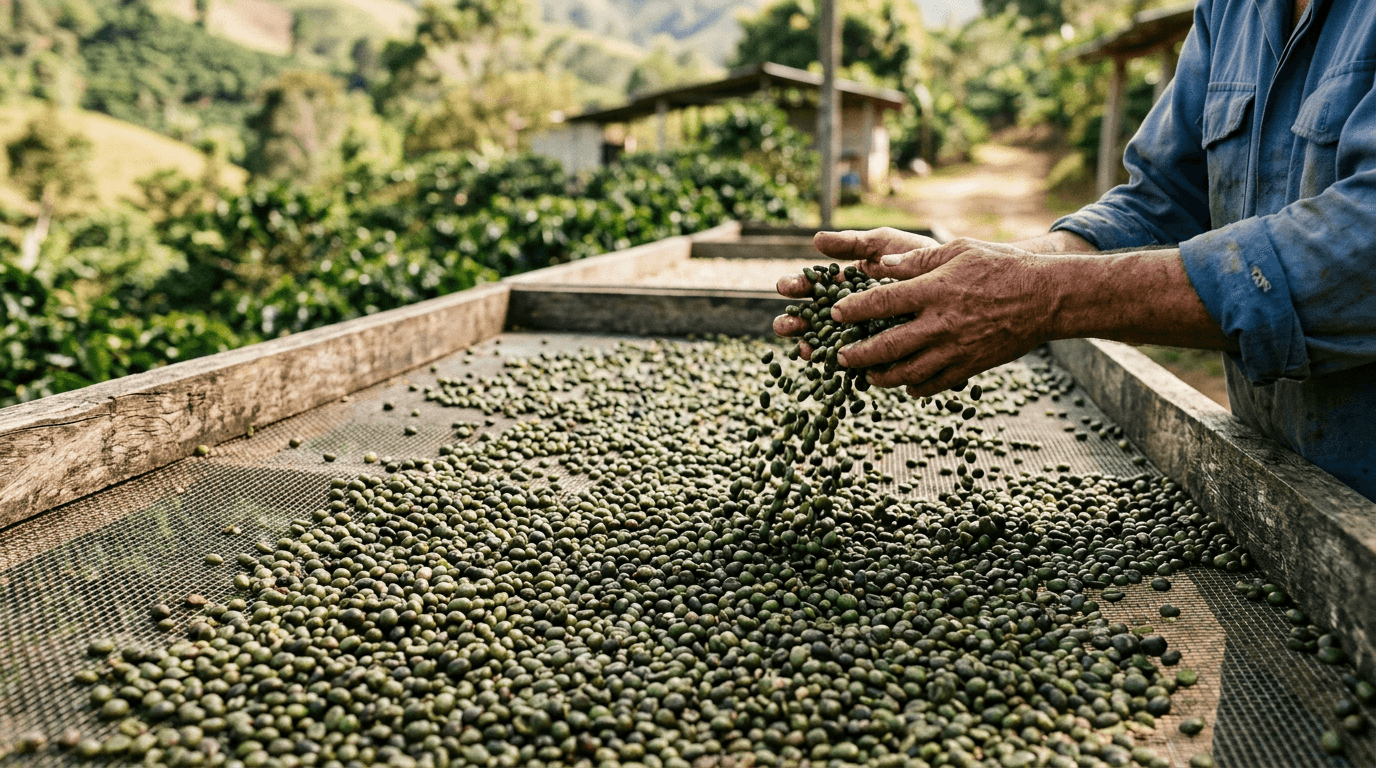
Buyers routinely assume an agricultural certification acts as an absolute shield, expecting the seal to filter out fungal contamination before the beans ever reach a roaster. In reality, the regulatory label strictly limits agricultural inputs - what a farmer sprays on the soil - not the atmospheric conditions during the volatile post-harvest drying phase where moisture and heat invite fungal growth. This exact regulatory blind spot is why the search for mold free coffee brands has fractured the specialty market, dividing roasters who rely entirely on standard farm seals from those who independently measure the chemical stability of their raw inventory. Understanding the mechanics of how a coffee cherry degrades, how thermal pressure alters organic compounds, and where supply chain economics intersect with physical infrastructure is the only reliable way to secure a genuinely clean cup.
Quick Summary
Evaluating clean coffee requires looking past basic agricultural certifications to understand post-harvest processing, roasting mechanics, and supply chain infrastructure. A genuinely clean cup depends on rigid moisture control across the entire supply chain rather than soil inputs alone.
- Certifications restrict synthetic pesticides but do not actively monitor post-harvest fungal growth or subsequent mycotoxin levels.
- Prolonged drying times and high ambient humidity are the primary catalysts for Ochratoxin A development in raw beans.
- Thermal degradation during the roasting process alters chemical structures, though it cannot reverse severe green bean contamination.
- Premium sourcing economics directly fund the raised drying beds and mechanical airflow needed to stabilize moisture thresholds rapidly.
Table of Contents
- Why agricultural certifications miss post-harvest contamination
- How atmospheric exposure dictates raw bean stability
- Where thermal degradation alters residual compounds
- How cooperative economics fund processing infrastructure
- Why extraction pressure isolates specific bean defects
- Who should skip premium lab-tested specialty beans
- FAQ
- Recommended Reads
Why agricultural certifications miss post-harvest contamination
The foundational misunderstanding in the specialty beverage market is treating a farm-level certification as a finished-product guarantee. When a farm earns an organic designation, inspectors are verifying a rigid set of soil management practices. They ensure no prohibited synthetic fertilizers, herbicides, or pesticides have been applied to the land for a continuous three-year period. This governs the health of the local ecosystem and the immediate safety of the farm workers handling the plants.
However, agricultural audits do not track the biological stability of the crop once it is picked. Fungal contamination is almost exclusively a post-harvest issue. A farm can maintain flawless organic soil, pick perfectly ripe cherries, and immediately lose the crop to Aspergillus or Penicillium fungi if a sudden rainstorm hits the drying patios. Fungi require water activity and a food source - both provided in abundance by the mucilage of a freshly picked, fermenting coffee cherry. Because organic regulations focus on artificial inputs, they lack strict mandates for the real-time measurement of mycotoxins like Ochratoxin A (OTA) before export.
Tracking these variables requires knowing exactly where the crop was processed. This is why a tightly managed Single Origin lot is vastly easier to audit for processing defects than a massive, multinational commodity lot. A single origin provides a traceable path back to a specific drying mill, allowing buyers to verify whether the mill uses concrete patios, raised mesh beds, or mechanical dryers.
How atmospheric exposure dictates raw bean stability
The critical window for fungal growth spans the few weeks directly after harvest. A raw coffee cherry contains significant internal moisture. To safely ship and store the seed inside, producers must dry the bean until its internal moisture content drops to a precise threshold that halts microbial activity and stabilizes the seed for transit.

If the drying process is too slow, the sustained moisture creates an ideal breeding ground for mold. This risk profile shifts drastically depending on the processing method. In the washed process, the fruit and sticky mucilage are mechanically scrubbed off the seed immediately after picking. Without the sugary fruit layer trapping moisture, the bare seed dries rapidly, significantly lowering the risk of fungal blooming. In contrast, the natural process involves leaving the fruit entirely intact while it dries in the sun. This method yields a sweeter, heavier cup profile but dramatically increases the risk of fermentation defects and mold if the cherries are not rotated constantly to maintain airflow.
Even a perfectly dried crop can be compromised during international transit. Green coffee is packed into shipping containers and sent across the ocean. Fluctuating temperatures between the equator and northern ports cause condensation - container sweat - to pool inside the vessel. If water drips onto the burlap sacks, localized fungal blooms can infect an otherwise clean lot before it ever reaches the roasting facility.
Practical rule: When evaluating processing risks, prioritize washed coffees grown at high altitudes. The cooler ambient temperatures at high elevations naturally inhibit fungal reproduction during the vulnerable fermentation and drying stages.
Where thermal degradation alters residual compounds
The roasting drum is a chaotic thermal environment that radically alters the physical and chemical structure of the raw seed. As the internal temperature climbs past 380°F, the bean undergoes pyrolysis, a process where carbohydrates decompose and the cellular structure expands violently. This thermal pressure dictates what survives in the final cup.
While roasting destroys the actual mold spores responsible for contamination, the chemical byproducts of that mold - the mycotoxins - are highly heat resistant. Applying standard roasting temperatures degrades these toxins but does not eradicate them entirely. The extent of this degradation is directly tied to the roast profile's final temperature and development time. A dark roast organic coffee, which is subjected to temperatures exceeding 430°F, experiences a much higher rate of chemical degradation than a light roast pulled from the drum immediately after first crack. The sustained heat physically breaks down heavier, more complex molecular structures, including residual agricultural defects.
This principle applies to any organic roast coffee you analyze. The longer the development time, the more aggressively the heat degrades heat-stable compounds. This is particularly relevant when evaluating complex Blends, where roasters carefully extend the development phase to unify disparate moisture densities from different farm lots. The sheer mechanical force of a well-executed roast serves as a secondary processing phase, stabilizing the bean for consumption, but it cannot fix a fundamentally rotten raw ingredient.
How cooperative economics fund processing infrastructure
Chemical stability is ultimately a byproduct of financial stability. Smallholder farmers operating in the commodity market are paid based on the fluctuating New York C-market price, which frequently dips below the actual cost of production. When a farmer is losing money on every pound harvested, they cannot afford to invest in advanced drying infrastructure. They dry their crop on dirt patios or plastic tarps, exposing the beans to ground moisture and uneven airflow.
This is why buyers seeking clean cups look for organic fair trade coffee beans. The fair trade certification establishes a strict price floor, shielding cooperatives from commodity market crashes, and mandates an additional financial premium paid directly to a communal fund. This premium is what allows a farming cooperative to transition away from dirt patios and build raised parabolic drying beds.
Raised beds elevate the crop off the ground, allowing dry air to circulate entirely around the bean. This mechanical advantage drops the moisture content rapidly and uniformly, removing the water activity that fungi require to survive. Therefore, when you purchase organic and fair trade coffee, you are not merely buying a socio-economic concept; you are directly funding the physical infrastructure required to prevent mold formation at the source.
Why extraction pressure isolates specific bean defects
How you brew your coffee determines which chemical compounds are pulled from the roasted bean and deposited into your cup. Water acts as a solvent, and manipulating temperature, time, and pressure changes what that solvent can extract.
Immersion methods like a French press steep coarse grounds for several minutes, pulling out heavy oils and insoluble particulates alongside the flavor compounds. Pour-over methods use gravity to pull water through a paper filter, trapping the heavier lipids and yielding a lighter, more transparent cup. But pressurized methods change the extraction dynamics entirely.
Pulling an organic coffee espresso involves forcing finely ground beans under nine bars of atmospheric pressure using tightly regulated, high-temperature water. This violent, rapid extraction isolates and amplifies the most concentrated acids, sugars, and oils in the bean. If a roast carries a processing defect - an uneven fermentation or a trace earthy taint from poor storage - the intense pressure of an espresso extraction will magnify that defect immediately. Dialing in a dense, cleanly processed bean like an African Espresso requires absolute consistency from the roaster, because the brewing mechanics leave no room to hide agricultural flaws.
Comparison Table: Extraction Methods vs Defect Amplification
| Extraction Method | Pressure Level | Extraction Time | Filtration Type | Defect Amplification |
|---|---|---|---|---|
| French Press | Ambient (Gravity) | 4 - 5 Minutes | Metal Mesh | Low (Defects masked by heavy oils) |
| Standard Drip | Ambient (Gravity) | 3 - 5 Minutes | Paper Filter | Moderate (Traps lipids, highlights acids) |
| Espresso | 9 Bars | 25 - 35 Seconds | Metal Basket | High (Magnifies concentrated flaws) |
Who should skip premium lab-tested specialty beans
Precision sourcing and rigorous laboratory testing come at a steep financial premium. While clean processing benefits the entire supply chain, the reality of the consumer market is that a significant percentage of buyers will inadvertently destroy the chemical stability they just paid for.
If you purchase high-grade, mold-tested whole beans but store them in a transparent glass jar on a sunny countertop, UV light will rapidly degrade the oils. If you grind a week's worth of coffee in advance and leave it exposed to ambient air, oxidation will flatten the cup profile faster than any trace agricultural defect could. Consumers who batch-brew a pot and leave it cooking on a hot plate for hours are thermalizing the organic acids into bitter quinic acid, entirely wasting the roaster's careful development work. In these scenarios, the premium paid for pristine sourcing is functionally burned off by poor handling.
Practical rule: Never store daily-use coffee beans in the freezer. Moving beans in and out of a frozen environment causes condensation to form inside the bag, introducing the exact moisture your roaster spent weeks eliminating.
For consumers whose priority is maximum convenience without sacrificing chemical stability, formats that physically eliminate oxygen exposure are the most effective route. Products like 60 Pack Single Serve Coffee Capsules isolate the ground dose in a sealed, nitrogen-flushed environment. By removing oxygen entirely, the grounds are protected from atmospheric degradation, ensuring that the clean sourcing remains intact until the moment of extraction. If you cannot commit to rigorous at-home storage practices, prioritizing sealed formats yields a cleaner cup than mismanaging premium whole beans.
FAQ
Does the roasting process destroy all mycotoxins?
No. While the intense heat of the roasting drum destroys living mold spores and degrades a significant percentage of existing chemical toxins, it cannot completely eliminate severe mycotoxin contamination from a spoiled batch of green beans.
Is organic coffee automatically free of pesticides?
Organic certification prohibits the use of synthetic pesticides and fertilizers, but it does allow certain naturally derived pesticides. It also cannot completely prevent drift from neighboring non-organic farms, though buffer zones are strictly required.
Why does mold grow on green coffee beans?
Mold grows when raw beans retain a moisture content above 12% for extended periods. This usually happens due to poor airflow during patio drying, heavy rainfall during harvest, or condensation inside shipping containers during export.
Do dark roasts have fewer residual compounds than light roasts?
Generally, yes. The extended exposure to high temperatures (pyrolysis) in darker profiles breaks down complex cellular structures more aggressively, leading to a greater thermal degradation of residual agricultural compounds compared to lighter, shorter roasts.