7 Practical Gifts for Coffee Lovers: From Beans to Brewers
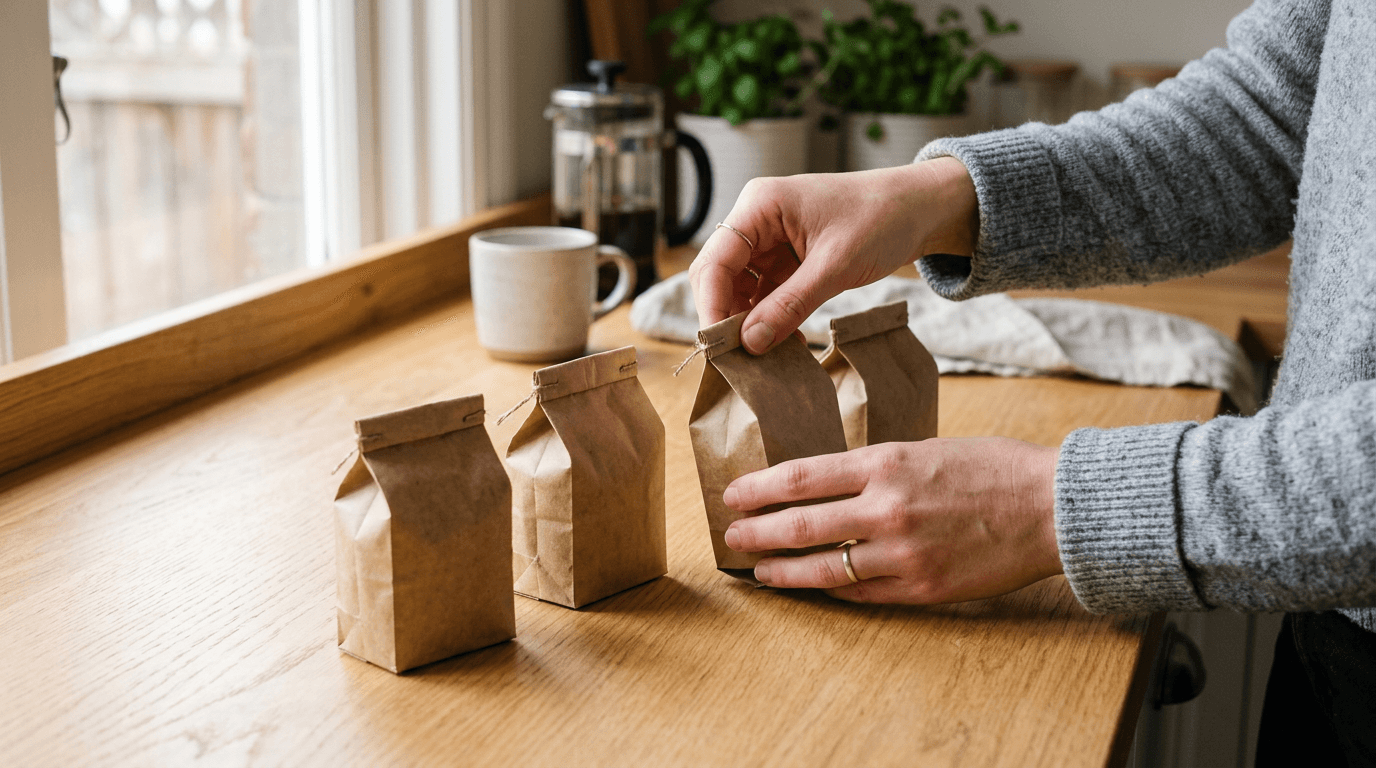
Buying whole bean coffee for a friend without knowing what grinder they own usually results in an expensive bag of beans sitting stale on a kitchen counter. The market for gifts for coffee lovers is crowded with novelty items and highly technical gear, but the items that actually get used are the ones that respect a drinker's existing daily routine. You cannot force a pour-over ritual onto someone who relies on a programmable drip machine at 5:00 AM.
To navigate this, we evaluate these options on two primary criteria. The first is routine integration: does this item fit their current morning workflow, or does it require them to learn a new, time-consuming extraction method? The second is flavor exploration: does this gift expand their palate safely, without forcing them to commit to two pounds of a roast profile they might despise? Every item on this list is judged against those two realities.
Quick Summary
A successful coffee gift matches the recipient's daily brewing habits and equipment constraints rather than forcing a new workflow upon them. Understanding their current baseline prevents wasted beans and unused hardware.
- Sampler sets offer safe palate expansion without committing to full bags.
- Equipment upgrades must solve a specific mechanical problem, like inconsistent grinding.
- Subscription services work best for high-volume drinkers with stable routines.
- Durable drinkware provides low-risk utility regardless of the coffee's origin.
Table of Contents
- 1. Curated Coffee Sampler Sets
- 2. Recurring Coffee Delivery Services
- 3. Cold Brew Extraction Gear and Blends
- 4. Single-Origin Whole Beans
- 5. Precision Burr Grinders
- 6. Specialty Flavored and Barrel-Aged Roasts
- 7. Purpose-Built Drinkware
- Matching the Gift to the Bottleneck
- FAQ
- Recommended Reads
Comparison Table
| Gift Category | Routine Integration | Flavor Exploration | Primary Risk |
|---|---|---|---|
| Sampler Sets | High | Very High | Too little volume to dial in grind |
| Subscriptions | Medium | High | Bean accumulation if consumption drops |
| Cold Brew Gear | Low (New Routine) | Low | Flattens delicate acidity |
| Single-Origin Beans | High | High | Highly variable crop profiles |
| Burr Grinders | High | Medium | Bulk, noise, and cost |
| Flavored Roasts | High | Medium | Residue contamination in grinders |
| Drinkware | Very High | None | Does not improve extraction |
1. Curated Coffee Sampler Sets
A coffee sampler gift is a collection of small-batch bags - typically 2oz to 4oz each - covering a wide spectrum of roast profiles and origins. It is built for the drinker who wants to taste different regions without committing to a standard 12oz or 16oz bag.

Roasters create these by pulling a cross-section of their active inventory. A well-constructed sampler will intentionally contrast its components, placing a dark, smoky blend next to a bright, fruity African roast. Because coffee begins losing aromatic volatiles within weeks of roasting, premium samplers utilize nitrogen flushing. By replacing the oxygen in the small foil pouches with inert nitrogen gas before sealing, the roaster stalls the oxidation process, ensuring that the sixth bag in the box tastes as fresh as the first.
High discovery potential, low volume per profile
The format removes the anxiety of trying something new. If a recipient traditionally drinks dark roasts, giving them a Best Sellers Sample Pack: 6Bean, Cowboy, Breakfast, Peru, Mexico, Bali allows them to test lighter, more acidic profiles in a low-stakes environment.
However, the small volume introduces a mechanical stricture. A 2oz sample yields roughly 56 grams of coffee. That is exactly enough for one large pot in a drip machine, or perhaps two standard pour-overs. If the recipient uses a manual espresso machine and misjudges the grind size on their first attempt, they will burn through half the sample pulling a bad shot, leaving them with almost nothing left to correct the dial-in.
2. Recurring Coffee Delivery Services
A coffee subscription gift is a scheduled delivery mechanism that ships freshly roasted beans on a recurring weekly or bi-weekly cadence. It is designed for the daily consumer whose primary frustration is running out of quality coffee and being forced to settle for stale grocery store alternatives.
The mechanism relies on tight integration between the subscription platform and the roaster's production schedule. Instead of coffee sitting in a warehouse, beans are roasted, allowed to rest for the standard 48 to 72 hours so aggressive carbon dioxide can degas, and then shipped immediately. This logistics model guarantees the recipient receives the coffee right as it enters its peak flavor window, which typically lasts from day five to day twenty-one post-roast.
Solves the freshness problem, creates inventory pressure
Automating the supply chain removes a major point of friction for home brewers. They never have to monitor their pantry levels, and they are consistently supplied with beans that contain fully intact aromatic compounds.
This system breaks down entirely if the recipient's consumption habits fluctuate. If they travel for a week, or simply decide to skip coffee for a few days, the automated shipments do not stop. The bags pile up in the cupboard, aging past their prime. What began as a premium freshness guarantee quickly becomes a backlog of degrading inventory, creating guilt rather than convenience for the recipient.
3. Cold Brew Extraction Gear and Blends
Cold brew systems include both the coarse-ground beans and the steeping vessels designed specifically for room-temperature or refrigerated extraction. This hardware and coffee combination targets drinkers who prefer iced beverages or those who suffer from acid reflux when consuming standard hot coffee.
The chemistry of cold brew differs fundamentally from thermal brewing. Hot water acts as an aggressive solvent, rapidly pulling out acids, sugars, and eventually the bitter tannins from the coffee grounds. Using cold water slows this extraction dramatically, requiring a dwell time of 12 to 24 hours. Because the temperature is too low to dissolve certain acidic compounds and oils, the resulting Cold Brew Coffee concentrate is significantly heavier in body and lower in perceived acidity, creating a smooth, chocolatey profile.
Forgiving extraction method, requires dedicated fridge space
Cold extraction is highly forgiving. A slight variation in water volume or an extra hour of steeping will not ruin the batch, unlike the strict timing required for an espresso shot. The concentrate can be stored for up to two weeks, allowing the user to simply dilute a portion with water or milk each morning.
The method heavily limits flavor complexity. The same low temperature that prevents bitter tannins from extracting also fails to dissolve the delicate floral and fruity esters prized in light roasts. Running an expensive, highly complex Ethiopian bean through a cold brew system simply flattens its profile, making it taste like any generic dark roast. Furthermore, the steeping vessel demands substantial vertical space in a refrigerator, which can be an annoyance in a crowded kitchen.
4. Single-Origin Whole Beans
Single-origin coffee isolates beans sourced from one specific geographical location - often a single farm, estate, or regional cooperative. It is the ideal choice for the analytical drinker who wants to taste the specific terroir of a region, from the volcanic soils of Guatemala to the high-altitude climates of Kenya.
Unlike proprietary blends, which roasters engineer by mixing different beans to maintain a consistent flavor profile year-round, single origins are entirely dependent on the seasonal crop cycle. The processing method heavily dictates the final cup. A "washed" single origin has the fruit stripped from the seed before drying, resulting in a clean, tea-like clarity. A "natural" or dry-processed single origin leaves the cherry on the seed as it dries in the sun, allowing the sugars to ferment and impart heavy, jam-like fruit notes into the bean.
Distinct regional profiles, susceptible to seasonal variation
Pouring a Single Origin is an educational exercise. It teaches the recipient exactly what a specific soil and processing method tastes like without the interference of a blending agent.
That purity is also its primary drawback. A single origin offers nowhere to hide. If a particular Rwandan crop has an aggressively tart, tomato-like acidity, the drinker has to endure it for the entire bag. Because these coffees are not engineered for crowd-pleasing balance, they are polarizing. You should skip this option if the recipient prefers a traditional, comforting cup of coffee that tastes exactly the same every morning.
5. Precision Burr Grinders
Precision burr grinders are mechanical devices that crush coffee beans to a highly uniform size using two rotating metal or ceramic surfaces (burrs). This is the foundational piece of hardware in any home setup, acting as the gateway to better coffee accessories and improved extraction.

The mechanism is what separates a burr grinder from a cheap blade grinder. Blade grinders chop beans randomly, creating a chaotic mix of massive chunks ("boulders") and microscopic dust ("fines"). When water hits that uneven mix, it over-extracts the dust, creating bitterness, while under-extracting the boulders, causing sourness. A burr grinder forces the beans through a fixed mechanical gap, ensuring every particle is roughly the same size, which allows the water to extract flavor evenly across the entire bed of coffee.
The single biggest flavor upgrade, significant upfront cost
Moving from pre-ground coffee or a blade grinder to a true burr grinder will immediately and noticeably improve the taste of any coffee brewed through it. It grants the user control over their extraction time by letting them adjust the physical resistance the coffee bed provides to the water.
Practical rule: Never buy a cheap burr grinder under the assumption that any burrs are better than blades. Low-end models with loose internal tolerances actually produce just as many fines as a blade grinder, but cost three times as much.
The limit here is environmental impact. Quality burr grinders are inherently heavy due to the large motors required to provide high torque at low speeds. They occupy permanent counter space, require regular disassembly and cleaning to remove rancid oils, and can be loud enough to wake a sleeping house.
6. Specialty Flavored and Barrel-Aged Roasts
This category encompasses beans that have been intentionally infused with external flavor compounds, either through the application of natural oils post-roast or by aging the green, unroasted seeds in spent liquor barrels.
The barrel-aging mechanism relies on the porous cellular structure of green coffee. When placed inside a freshly emptied whiskey, rum, or bourbon barrel, the seeds absorb the ambient moisture, wood aromatics, and residual spirit trapped in the oak staves. The coffee sits in the barrel for several weeks, taking on the heavy, sweet esters of the alcohol. During the roasting process, the high heat entirely burns off the actual alcohol content, but the complex sugars and aromatic compounds remain locked inside the cellular matrix of the bean.
Distinctive aromatic experience, dominates the equipment
Flavored and barrel-aged coffees provide an intense sensory deviation from a standard cup. They make excellent dessert coffees and require no syrups or additives to achieve their advertised profile.
The heavy aromatic oils used in flavored coffees, as well as the dense wood sugars from barrel aging, leave a stubborn residue on equipment. If a user runs a highly infused vanilla hazelnut or heavy bourbon-barrel bean through their expensive burr grinder, the burrs will retain those oils. The next five pots of standard coffee ground in that machine will carry a ghost flavor of the infused bean. Drinkers must either clean their grinder thoroughly after use or dedicate a separate, cheaper grinder entirely to flavored roasts.
7. Purpose-Built Drinkware
Purpose-built drinkware includes the physical vessels designed to hold brewed coffee, ranging from thick-walled ceramic latte cups to double-walled vacuum thermoses and lightweight enamel steel camp mugs. While often dismissed as generic coffee gifts, the right vessel fundamentally alters how the beverage degrades over time.
The governing principle is thermal mass and heat transfer. Thick ceramic mugs absorb a significant amount of the coffee's initial heat - which is why cafes keep their cups stacked on top of the warm espresso machine - but they maintain that temperature steadily. Vacuum-insulated thermoses prevent conductive heat transfer entirely, trapping the heat for hours. Enamel over steel, conversely, is highly conductive; it drops the coffee's temperature to a drinkable range rapidly while surviving physical impacts that would shatter ceramic.
Matches the vessel to the venue, fails to improve bad coffee
Matching the mug to the drinker's environment is highly practical. Providing an enamel piece from All Merch equips an outdoorsman with a lightweight, fire-safe vessel that can be clipped to a bag.
A vessel cannot rescue poor extraction. If the coffee is under-extracted and sour, an expensive vacuum thermos merely keeps it perfectly hot and aggressively sour for six hours. Furthermore, highly conductive enamel mugs can become too hot to hold comfortably if the user pours water straight off the boil directly into them.
Matching the Gift to the Bottleneck
Selecting the right option requires identifying where the recipient's current routine fails.
If their bottleneck is palate fatigue - they are bored with their daily cup but afraid to waste money on a bad bag - take the sampler set to remove the financial risk of exploration. If their bottleneck is mechanical inconsistency, where their coffee tastes bitter on Tuesday and sour on Wednesday, step past the beans entirely and provide a precision burr grinder. For the drinker whose bottleneck is strictly logistical - they constantly run out of fresh beans - a subscription delivery service removes the friction of supply. Finally, if you genuinely do not know what equipment they own or how they prefer their coffee, avoid whole beans and grinders entirely. In those cases, durable drinkware offers practical utility without interfering with their preferred extraction method.
FAQ
Can you use single-origin beans in a drip coffee maker? Yes, provided you adjust the grind size. However, light-roasted single origins often require water closer to 205°F to extract properly. Many standard drip machines max out at 195°F, which can leave these delicate coffees tasting sour and under-extracted.
Do flavored coffees expire faster than standard whole bean coffee? The base coffee oxidizes at the exact same rate. However, the added flavor oils can begin to smell rancid if left exposed to heat and sunlight for extended periods. It is best to consume them within a month of opening.
Why is my cold brew coming out bitter? If your cold brew tastes bitter rather than smooth, your grind is too fine, or you are steeping it at room temperature for too long. Switch to a coarser grind, similar to raw sugar, or move the steeping vessel into the refrigerator to slow down the extraction of bitter tannins.
What is the correct grind size for a coffee sampler pack? Because you have limited volume to test with, start in the middle. Use a medium grind (like sea salt) for a standard pour-over or drip machine. If the water rushes through and tastes sour, go finer on your second and final attempt.