5 Best Dark Roast Coffee Options for a Heavy-Bodied Brew
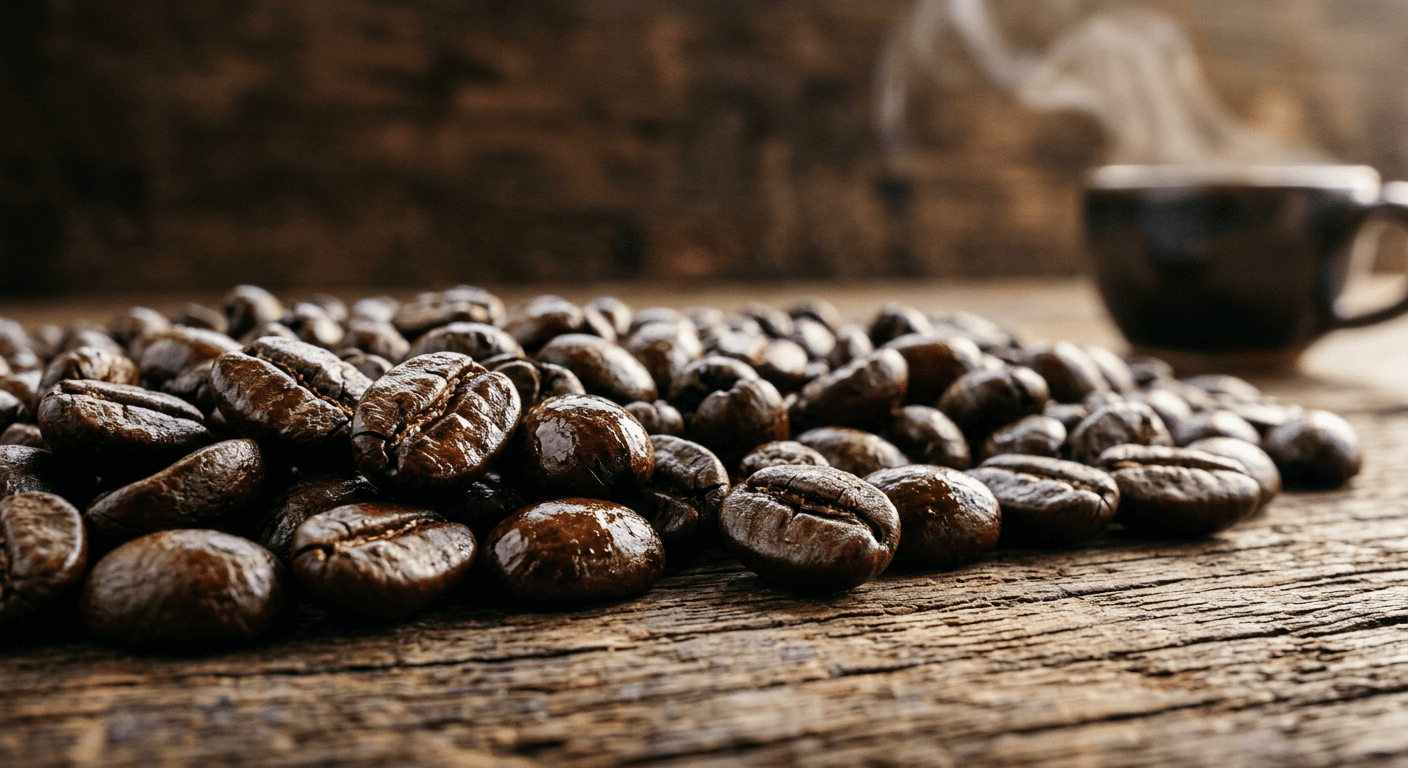
A common misconception about the best dark roast coffee is that the roasting process exists merely to mask inferior, stale beans. In reality, pushing a roast past the second crack is a deliberate extraction technique designed to lower acidity, caramelize surface sugars, and develop a heavy, chocolate-forward body. Beans subjected to this extreme heat lose much of their dense cellular structure, becoming highly soluble and prone to over-extraction if brewed with water that is too hot. Getting this right requires sourcing dense, high-altitude crops that can survive the roasting drum without turning to ash, and blending them to maintain a consistent flavor profile regardless of seasonal crop variations.
Quick Summary
Dark roast coffee refers to beans roasted past the second crack, resulting in oils surfacing on the bean, heavily caramelized sugars, and suppressed acidity. Achieving a balanced cup requires careful attention to origin density, blending ratios, and water temperature during brewing.
- Darker roasts are more soluble and extract faster than lighter roasts.
- Brewing temperatures should be lowered to prevent pulling bitter tannins.
- High-altitude beans are necessary to withstand the extended roasting time.
- Blends offer batch consistency, while single origins highlight specific terroir.
Table of Contents
- Evaluating the Best Dark Roast Coffee Options
- 1. Peet's Coffee Major Dickason's Blend
- 2. Kicking Horse Coffee Grizzly Claw
- 3. Death Wish Coffee Espresso Roast
- 4. La Colombe Coffee Roasters Corsica
- 5. Volcanica Coffee Dark Roast Coffee
- Matching the Roast to Your Routine
- Recommended Reads
| Product | Sourcing and Formulation | Features | Pros | Cons | Target Audience |
|---|---|---|---|---|---|
| Peet's Coffee Major Dickason's Blend | Traditional Heritage Blends | Indo-Pacific mix, 10% sub discount | Heavy body, Subscription savings, Free sub shipping | High dose required, Burns through fast, Intense flavor | Heavy-bodied blend drinkers |
| Kicking Horse Coffee Grizzly Claw | Certified Organic Origins | USDA Organic, Central/South America | Certified clean, Volume discounts, Bulk shipping perk | High shipping threshold, Rigid bulk rules, Costly singles | High-volume organic buyers |
| Death Wish Coffee Espresso Roast | Functional and High-Caffeine | Arabica/Robusta, Instant packets | Extreme caffeine, High ratings, Instant formats | Overdose risk, Jitter potential, Robusta harshness | Functional caffeine seekers |
| La Colombe Coffee Roasters Corsica | Traditional Heritage Blends | Four-region blend, Target retail | High stability, Retail availability, Keurig discounts | Third-party lock-in, External hardware, Indirect buying | Grocery staple shoppers |
| Volcanica Coffee Dark Roast Coffee | Specialized Low-Acid Profiles | Colombia volcanic beans, pH 5.4 | Low acid, Dietary certified, Single origin | High price point, Premium cost, Niche sourcing | Acid-sensitive drinkers |
Evaluating the Best Dark Roast Coffee Options
Comparing dark roasts based purely on bag design or vague flavor notes leaves you guessing at the physical properties of the beans. To find the right fit, you must evaluate the beans through the lens of Sourcing and Formulation. This framework strips away marketing terms and categorizes the coffee by how it was constructed and what physical properties the roaster prioritized.
We break this classification axis down into four specific categories. Traditional Heritage Blends rely on combining diverse regional beans to create a uniform, year-round flavor profile that never shifts. Functional and High-Caffeine formulations aggressively mix in different bean species specifically to alter the chemical payload of the final cup. Certified Organic Origins prioritize transparent, audited agricultural supply chains over extreme chemical extraction. Specialized Low-Acid Profiles select beans based on the specific mineral content of the soil they grew in to naturally alter the pH level of the brewed coffee.
Practical rule: Dark roast coffee beans are highly soluble because the intense heat shatters their cellular walls. Lower your brewing water temperature to roughly 195°F to avoid extracting bitter, astringent compounds.
If you are unsure where your palate lands, testing a [Best Sellers Sample Pack: 6Bean, Cowboy, Breakfast, Peru, Mexico, Bali] establishes a baseline for how different bean origins handle varying degrees of roasting heat. This helps dial in your preference before committing to bulk orders. While this list focuses on caffeinated options, buyers looking for a dark roast decaf coffee should apply these exact same sourcing criteria to ensure the decaffeination process did not compromise the bean's structural integrity.
1. Peet's Coffee Major Dickason's Blend
The primary bottleneck for home brewers is inconsistent flavor extraction from batch to batch, which Peet's Coffee solves by heavily mixing distinct regional profiles. This dark roast is categorized as a Traditional Heritage Blend, relying on a deliberate combination of Latin American and Indo-Pacific beans to engineer a heavy, predictable body.
Latin American beans generally provide bright, acidic structures. Indo-Pacific beans deliver deep, earthy tones. Roasting them both past the second crack forces the sugars to caramelize uniformly while burning off the regional acidity. The physical result is an oily, highly soluble bean. It extracts aggressively. The manufacturer's brewing instructions suggest measuring a massive 4 tablespoons of coffee for every 12 fluid ounces of water. This heavy dosing ensures the oils overwhelm the water volume, creating a dense cup rather than a watered-down extraction. According to its published pricing structure, subscribers receive free shipping and up to 10% off all orders to offset this consumption rate.
High dosing ratios dictate the brewing economy
We would hesitate to select this option if tight budget control per cup is your primary goal. The 4 tablespoons per 12 ounces requirement means a standard bag runs out significantly faster than coffees utilizing standard 2 tablespoon ratios, increasing your frequency of purchase.
Choose this blend when seeking a familiar, heavy-bodied daily drinker and you are comfortable burning through beans slightly faster to achieve it.
Pros
- Delivers consistently heavy body
- Subscription provides ongoing discounts
- Ships free for recurring orders
Cons
- Requires unusually high dose ratios
- Bags deplete rapidly
- Masks delicate origin notes
2. Kicking Horse Coffee Grizzly Claw
How do you guarantee clean agricultural practices without sacrificing the heavy body expected from a dark roast? Kicking Horse Coffee answers this by submitting their Central and South American Arabica sourcing strictly to Ecocert Canada audits.
Sitting firmly in the Certified Organic Origins category, this roast eschews blending across continents in favor of tightly controlled American supply lines. It is certified as USDA Organic under code CA-ORG-006. This ensures no synthetic fertilizers accelerated the bean growth. This slower maturation allows the Arabica beans to develop the structural density required to withstand a dark roast profile without disintegrating. Priced on the official brand website, the commercial model relies heavily on volume. Buyers pay $16.99 per bag, unlock free USA shipping at $75, and save 10% via subscriptions, skipping larger bulk discounts.
Supply chain transparency dictates the bulk threshold
I would hold off on single-bag purchases because the free shipping requires a steep minimum order. Buyers who only need a single bag for occasional use face additional shipping fees that ruin the base value.
This suits households consuming high volumes who require certified organic processing and can clear the bulk shipping threshold easily.
Pros
- Certified organic supply chain
- Deep volume discounts available
- High-density Arabica beans
Cons
- High free shipping threshold
- Punishes single-bag buyers
- Requires bulk commitment for maximum value
3. Death Wish Coffee Espresso Roast
Formulated from USDA Organic and Certified Fair Trade Arabica and Robusta beans, Death Wish Coffee is engineered specifically for chemical potency rather than delicate terroir. This places it squarely in the Functional and High-Caffeine category, designed for drinkers who view their morning cup primarily as a physical stimulant.
Traditional heritage profiles use Arabica exclusively. This blend intentionally introduces Robusta beans. Robusta carries roughly double the caffeine content of Arabica. It produces a much thicker crema when extracted under pressure, making these ideal dark roast espresso beans. The roasting process pushes the beans until they develop cocoa, caramelized sugar, and cherry undertones. This burns off the harsh, rubbery notes often associated with raw Robusta. It maintains an average customer rating of 4.8 out of 5 stars from 867 reviews on the official website. The coffee is sold in 16-ounce bags with both ground and whole bean options. The company also offers instant coffee packets containing 4.9g of coffee that deliver a massive 300mg of caffeine per serving.
Robusta inclusion alters the chemical extraction
The instant packet format delivers 300mg of caffeine per 4.9g dose, which pushes well past standard tolerances. Anyone sensitive to high caffeine loads, prone to jitters, or managing a heart condition should look at standard, pure Arabica blends instead.
Opt for this roast if you actively want the physical kick of a Robusta blend and measure your daily caffeine doses carefully.
Pros
- Exceptionally high caffeine payload
- Generates thick espresso crema
- Fair trade certified sourcing
Cons
- Extreme overdose risk
- Robusta can taste aggressive
- Unsuitable for sensitive drinkers
4. La Colombe Coffee Roasters Corsica
A line cook resetting a hopper during a morning rush needs a predictable output, not a temperamental crop that changes profile every season. La Colombe Coffee Roasters delivers that stability by aggressively blending across four distinct regions.
Operating as a Traditional Heritage Blend, this profile combines beans sourced from Brazil, Colombia, Honduras, and Mexico. By pulling from four separate climates, the roaster ensures that if one country's harvest yields an overly acidic crop, the other three balance it out inside the roasting drum. Brewing directions specify using 2 tablespoons of coffee for every 6 ounces of water to hit the correct extraction yield. It is certified as Kosher, vegan, vegetarian, and pescatarian with no artificial ingredients. Priced at $14.99 for a 12-ounce bag at Target, its availability is heavily retail-focused. Furthermore, auto-delivery subscriptions on Keurig.com offer a 25% discount off the list price for pods and bagged coffees.
Practical rule: Buying dark roast coffee ground limits your extraction control because the surface area is already fixed; if the brew tastes bitter, your only remaining adjustment is to lower the water temperature.
Four-region blending prioritizes batch stability
The heaviest commercial discounts require subscribing via a specific third-party platform (Keurig.com), separating your coffee purchasing from direct roaster relationships. Drinkers who want to buy direct without managing external hardware ecosystem subscriptions should pass.
Buy this when sourcing a reliable grocery-available staple is more important to you than tracing a single farm origin.
Pros
- Highly stable flavor profile
- Wide retail availability
- Steep third-party subscription discounts
Cons
- Ties best pricing to Keurig.com
- Requires a four-region mix
- Indirect purchasing model
5. Volcanica Coffee Dark Roast Coffee
Lowering the final acidity of a brew happens at the agronomy level before the beans ever reach a roaster. Volcanica Coffee leverages Specialized Low-Acid Profiles by exclusively sourcing beans harvested from volcanic mountain regions of Colombia.
The mechanism here is entirely soil-based. Volcanic ash is heavily alkaline, and coffee trees grown in this specific mineral density naturally produce cherries with lower acidic compounds. When these specific Colombian beans are subjected to a dark roast, the heat destroys what little malic and citric acid remains. The resulting brew has a scientifically measurable low-acidity pH level of 5.4. It is certified as Kosher, Dairy-free, Gluten-free, and Low Acid. Because it relies on highly specific geographic conditions rather than broad regional blending, exploring this [Single Origin] approach commands a premium. According to its published pricing, a 16-ounce bag of its Sumatra Mandheling coffee is priced at $21.99, indicating the baseline cost of its premium regional dark roasts.
Mineral-dense soils suppress the final cup acidity
The reliance on specific volcanic lots pushes the price well over twenty dollars for a 16-ounce bag, positioning it far above standard grocery blends. Buyers looking for a low-cost bulk option to feed a high-volume office machine will find this prohibitive.
Select this if acid reflux or digestive sensitivity normally keeps you away from heavy coffees.
Pros
- Verified low pH level
- Sourced from specific volcanic soil
- Extensive dietary certifications
Cons
- Premium price point
- Highly specific flavor profile
- Costly for daily bulk brewing
Matching the Roast to Your Routine
Choosing the correct profile comes down to mapping the Sourcing and Formulation categories to your daily habits.
If your routine demands absolute consistency and heavy body, Traditional Heritage Blends provide the stability needed to pull the same shot every morning. Dialing in a [6 Bean Blend] or similar multi-region mix ensures that seasonal crop failures do not alter your morning cup.
When your primary goal is physical stimulation, Functional and High-Caffeine roasts deliver the required chemical payload. Swapping to an [African Espresso] or a dedicated Robusta mix provides the intense extraction and crema necessary to cut through heavy milk and syrups.
For households moving through massive volumes of coffee that require strict supply chain auditing, Certified Organic Origins offer peace of mind. Keeping this brewed coffee hot by retaining heat in an [Enamel Mug] allows you to enjoy clean, organically farmed coffee throughout a long morning without reheating.
Finally, if standard roasts trigger digestive discomfort, Specialized Low-Acid Profiles offer a biological workaround. The reliance on volcanic soils structurally alters the pH, allowing sensitive drinkers to enjoy deep, chocolate notes without the painful acidic backlash.