5 Best Coffee Subscription Services for 2026
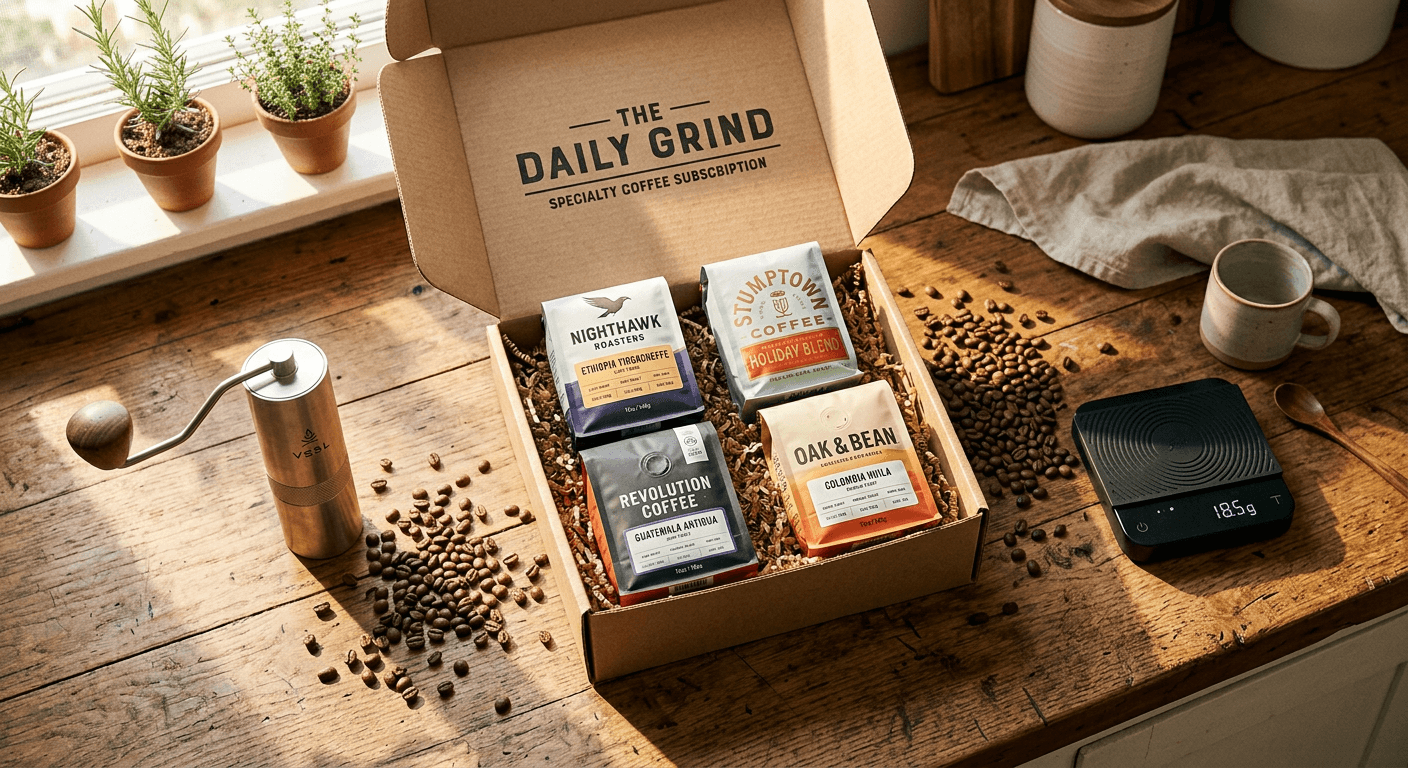
You stare at the roast date on the bag of beans you just bought, realizing it was packaged six months ago. By the time coffee sits on a retail shelf for half a year, the volatile aromatic compounds that dictate flavor have oxidized, leaving behind a flat, woody extraction regardless of how perfectly you dial in your grinder. The primary mechanism to bypass this supply chain lag is finding the best coffee subscription, which routes freshly roasted beans directly from the cooling tray to your mailbox.
Quick Summary
A coffee subscription service automates the procurement of fresh beans by establishing a recurring delivery schedule directly from roasters or centralized curators. We evaluate five established platforms to help you align their fulfillment logistics with your consumption rate and flavor preferences.
- Trade Coffee routes orders via API to independent roasters for decentralized fulfillment.
- Atlas Coffee Club centralizes roasting to focus on single-country educational experiences.
- Blue Bottle Coffee offers highly consistent, roaster-direct profiles with rigid gift policies.
- Bean Box curates multi-roaster tasting flights through centralized repackaging.
- Podium Coffee Club operates a strict monthly batch-shipping model for premium whole beans.
Table of Contents
- How to Choose: Understanding Curation Models
- 1. Trade Coffee
- 2. Atlas Coffee Club
- 3. Blue Bottle Coffee
- 4. Bean Box
- 5. Podium Coffee Club
- Matching the Model to Your Routine
- Recommended Reads
Comparison Table
| Product | Curation Model | Features | Pros | Cons | Target Audience |
|---|---|---|---|---|---|
| Trade Coffee | Aggregator | API order routing, variable frequencies | Fresh roaster-direct shipping, precise intervals, high variety | Inconsistent carrier speeds, varying roast styles, complex logistics | Daily drinkers wanting constant variety |
| Atlas Coffee Club | Themed Curation | Single-country focus, tasting notes | Educational materials, 30-day guarantee, focused sourcing | Cannot swap origins, centralized roasting, fixed narratives | Newer drinkers learning regional differences |
| Blue Bottle Coffee | Roaster-Direct | Vertical integration, prepay discounts | Highly consistent profiles, direct control, prepay savings | Rigid gift rules, no Canada gift shipping, single brand | Extraction purists valuing consistency |
| Bean Box | Themed Curation | Multi-roaster curation, store credit returns | Easy cancellations, low-risk trials, centralized support | Potential oxygen exposure, complex repackaging, higher markup | Explorers evaluating multiple roasters side-by-side |
| Podium Coffee Club | Aggregator | Monthly batching, whole bean only | Peak freshness timing, exclusive sourcing, award-winning roasters | Rigid monthly schedule, no ground option, no mid-month fulfillment | Premium buyers with secondary coffee supplies |
How to Choose: Understanding Curation Models
Before analyzing specific platforms, you must understand the logistical frameworks that dictate how your coffee is processed. The industry relies on one classification axis that separates these services: the Curation Model. When you upgrade from a stale grocery store bag or a mass-market k cup sampler pack, you are essentially choosing between three distinct supply chains.
First, the Aggregator model operates as a technology layer. These companies do not roast coffee. Instead, they ingest your preferences and route digital orders to a network of independent roasters. The roaster receives the ticket, roasts the batch, and ships it directly to you. This preserves freshness but introduces variability in shipping speeds because each roaster uses their own preferred carrier.
Second, the Roaster-Direct model represents a vertically integrated operation. A single brand buys the green coffee, roasts it in their own facilities, and ships it from their own loading docks. This removes the variable of multiple roasting philosophies, ensuring that a light roast always meets the exact same internal specification month after month.
Third, the Themed Curation model relies on centralized fulfillment to build specific experiences. These companies either buy green coffee to roast centrally under a specific monthly theme, or they receive bulk shipments from various roasters to repackage into a structured drink sampler or tasting box. The advantage is a cohesive narrative and centralized customer service; the trade-off is often the extra time the coffee spends moving between intermediate facilities before reaching your hopper. If you are putting together a coffee sampler gift, understanding whether the recipient values storytelling or raw extraction speed will point you toward the correct model.
1. Trade Coffee
The mistake buyers make with aggregator services is assuming the coffee ships from a central warehouse and loses a week in transit before the carrier even scans it. Trade Coffee operates as a pure Aggregator, designed for high-volume consumers who want to cycle through independent roasters across the United States without maintaining twenty separate accounts.
The platform functions entirely on API integrations. When your subscription triggers, the algorithm matches your logged taste preferences against current inventory profiles and fires a purchase order to a specific roaster. That independent facility roasts the beans to order, prints the shipping label, and hands it directly to their local postal carrier. Your data lives with the platform, but the physical product never touches an intermediate facility.
Decentralized fulfillment scales personalization
The pricing reflects a bifurcated tier system. All coffees in the Classic Tier cost a flat rate of $16.99 per bag. The Premium Tier bumps that flat rate to $21.99 per bag. Consumption rates vary wildly between single-cup drinkers and multi-adult households. Customers can therefore schedule an order every 1, 2, 3, 4, or 6 weeks. If logistics break down, call phone customer service. They operate Monday through Friday from 9 AM to 5 PM EST.
The structural limitation of this model is shipping consistency. Because you rely on dozens of different roasting facilities, you do not control the final-mile carrier. One week your box might arrive via priority mail in two days, and the next week a different roaster might utilize a slower logistics network that takes five days, forcing you to constantly monitor your hopper levels to avoid running out.
We would skip this platform if you demand your deliveries arrive on the exact same day of the week, every single time. Consider this architecture if you want constant exposure to new roasting philosophies while keeping your billing centralized.
Pros
- Direct shipping preserves post-roast freshness.
- Highly granular delivery frequency controls.
- Eliminates the need to manage multiple roaster logins.
Cons
- Carrier transit times vary wildly by roaster location.
- Premium coffees sit behind a higher paywall.
- You cannot dictate the exact ship date, only the interval.
2. Atlas Coffee Club
You want to hand someone a coffee subscription gift that feels like a distinct monthly event, rather than just a utilitarian replenishment of kitchen supplies. Atlas Coffee Club operates under the Themed Curation model, focusing strictly on a travel-centric approach that highlights single-origin coffees from different countries.
Rather than routing orders to third parties, this service centralizes the roasting process. They source green coffee from one specific country per month. They roast it to their internal specifications. Packages include postcards, flavor notes, and brewing tips specific to that region. You select ground or whole bean options. You also dial in roast level preferences. Choices include light-to-medium, medium-to-dark, or all roast types depending on your grinder setup.
The educational angle drives the packaging
The barrier to entry is kept intentionally accessible. A single bag subscription costs $14 per shipment plus a shipping fee. The company maintains a 30-Day Money Back Guarantee. This mitigates the risk of a customer hating a particular origin's terroir. Customers can get their money back if they do not love the coffee. Customer support handles these requests by phone. Lines run from 9 AM to 5 PM CST, Monday through Friday.
Practical rule: Always match the subscription's return policy to your own willingness to experiment; if you hate bright, acidic coffees, an unskippable monthly origin tour requires a robust refund mechanism.
A strict single-country monthly rotation means you cannot bypass a region. While the 30-day guarantee protects your wallet after the fact, if you already know you strongly dislike earthy Sumatran profiles, you cannot simply swap that month's scheduled country out for a washed Ethiopian in advance. You receive the country on the calendar, or you cancel.
We would select this service for a newer coffee drinker looking to systematically learn how regional soils and altitudes impact cup flavor.
Pros
- Strong educational materials accompany every bag.
- Clear financial protection through the 30-day guarantee.
- Accessible entry price per shipment.
Cons
- Inflexible monthly origin calendar.
- Shipping fees apply on top of the base bag price.
- Centralized roasting removes independent roaster discovery.
3. Blue Bottle Coffee
According to its own policy, gift subscriptions from Blue Bottle Coffee are pre-paid and cannot be cancelled, paused, or modified in frequency, coffee type, or bag size once started. That strict operational boundary defines the Roaster-Direct model: a single, vertically integrated specialty coffee roaster offering customized coffee and matcha subscriptions delivered to customers' homes.
The mechanism here relies on total control over the supply chain. Because the company buys the green coffee, dictates the roasting curve, and handles the fulfillment, they achieve a level of batch-to-batch consistency that aggregators cannot match. If you dial in your espresso machine for their specific Single Origin profile in January, the extraction parameters will remain remarkably stable when you order it again in June.
Consistency replaces the discovery phase
Because they control the margins internally, customers can save an additional 10% when they prepay for their first three subscription shipments. Depending on the volume and rarity of the beans selected, subscriptions can range in cost from $11 to $52 per shipment, with shipping costs included in the price. However, cross-border logistics remain constrained; gift subscriptions are not currently available for shipment to Canadian addresses.
What makes me hesitate is the sheer rigidity of the prepaid gift structure. If you buy a three-month subscription for a friend and they realize they only drink coffee on weekends, the inability to pause or modify the frequency means bags will pile up in their pantry, staling long before they can grind them.
Buy this when you value dialed-in, repeatable extraction profiles and predictable shipping cadences over wildcard surprises.
Pros
- Shipping costs are baked into the displayed price.
- Prepayment unlocks an additional discount tier.
- High consistency across roast batches.
Cons
- Gift parameters lock permanently upon purchase.
- Zero cross-border Canadian gift shipping.
- Limits your exposure to a single brand's roasting style.
4. Bean Box
The administrative bottleneck of managing recurring deliveries is usually trying to execute a pause before your card is charged and the beans are boxed. Bean Box, a Seattle-based coffee subscription and gift service partnering with specialty roasters, operates as a Themed Curation model that tightly controls its fulfillment windows to manage multi-roaster complexity.
The platform operates by taking bulk deliveries from its partner roasters and centralizing the repacking phase. This allows them to build a curated coffee sampler featuring multiple different roasters in a single shipment. Instead of a roaster sending you one large bag, the centralized facility portions out smaller tasting sizes so you can run side-by-side extraction comparisons on the same morning.
Centralized returns lower the risk of experimentation
Managing this inventory flow requires strict cut-offs. To prevent a scheduled shipment, a subscription cancellation request must be submitted by 1 PM Pacific Time on the Wednesday before the shipment. If a delivery does go wrong, customers can contact customer support via phone or email, backed by a 30-day return policy for both defective and non-defective items in exchange for store credit.
Repackaging roasted coffee into smaller tasting flights inherently introduces oxygen. Every time coffee is moved from a bulk container into a smaller sampler pouch, it undergoes an accelerated degassing phase. This means these smaller samplers will stale noticeably faster than a hermetically sealed bag shipped directly from the original roasting drum.
Opt for this structure when evaluating regional roasters side-by-side matters more to your morning routine than securing absolute peak freshness.
Pros
- Allows side-by-side tasting of different roasters.
- Clear store credit policy for non-defective returns.
- Consolidated customer support handles all roaster issues.
Cons
- Strict Wednesday afternoon cut-off for cancellations.
- Repackaging introduces extra oxygen exposure.
- Returns yield store credit rather than cash refunds.
5. Podium Coffee Club
Unlike platforms that let you stagger deliveries down to the exact week, this coffee box locks you into a strict monthly schedule that prioritizes supply chain efficiency over individual convenience. Podium Coffee Club operates as an Aggregator, but one that exclusively sources whole-bean coffees from award-winning US roasters under a highly regimented batching system.
The mechanism relies on forced synchronization. Instead of API tickets firing randomly throughout the week, orders are processed for payment simultaneously on the 1st of each month. The roasters then know exactly how many batches to fire, and everything is shipped between the 5th and 10th of each month. Furthermore, all subscription plans ship coffee as whole beans only, entirely removing the operational overhead of grinding to order.
Forced batching guarantees peak roasting coordination
This synchronized fulfillment supports two distinct tiers: the Gold plan starts at $24.50 per month for a 300g bag, while the Platinum plan scales up to $29.50 per month for the same 300g volume of higher-tier curation.
Practical rule: Calculate your exact monthly volume before committing to a batched delivery system; a 300g bag yields roughly 15 to 18 standard cups depending on your brew ratio.
The undeniable drawback of this architecture is its inflexibility in the face of erratic consumption. If you host relatives and run out of beans on the 15th of the month, the rigid payment and processing schedule leaves you waiting up to three weeks for your next box to ship, forcing you to source emergency beans locally.
Reserve this service for households with secondary Tea or backup coffee supplies that want top-tier roasts without managing the logistics of independent ordering.
Pros
- Batched fulfillment ensures roasters only fire what is needed.
- Sources strictly from award-winning US operations.
- Exclusive whole-bean focus preserves aromatic compounds.
Cons
- Zero fulfillment occurs outside the 5th-10th shipping window.
- No pre-ground options exist for users without grinders.
- Higher entry price floor compared to baseline subscriptions.
Matching the Model to Your Routine
Selecting the right subscription requires mapping your daily consumption habits directly to the Curation Models we defined earlier.
If your priority is maintaining a hands-off, highly predictable brewing routine where you never run out of beans, the Roaster-Direct model is your baseline. The vertical integration ensures that your shipping cadences are met precisely, and the flavor profiles remain stable enough that you rarely need to adjust your grinder settings.
If your goal is evaluating the broader specialty coffee industry, the Aggregator model fits best. Because these platforms route orders to independent facilities, you receive peak freshness without the intermediate warehousing. Just be prepared to manage minor fluctuations in carrier delivery speeds, and ensure your household goes through coffee fast enough to justify the rotating deliveries.
If you are purchasing for a newer enthusiast, or you simply want to expand your palate without the commitment of buying large bags, lean on the Themed Curation model. Whether it involves educational materials on single-origin sourcing or repackaged samplers, this approach trades a few days of supply chain transit for a highly curated, easily digestible experience. When you pair this type of box with a functional gift like a Unisex Hoodie for camping trips, you build an experience rather than just setting up a grocery delivery.