4 Top Picks for the Best Coffee to Make Cold Brew: Beans to Concentrates
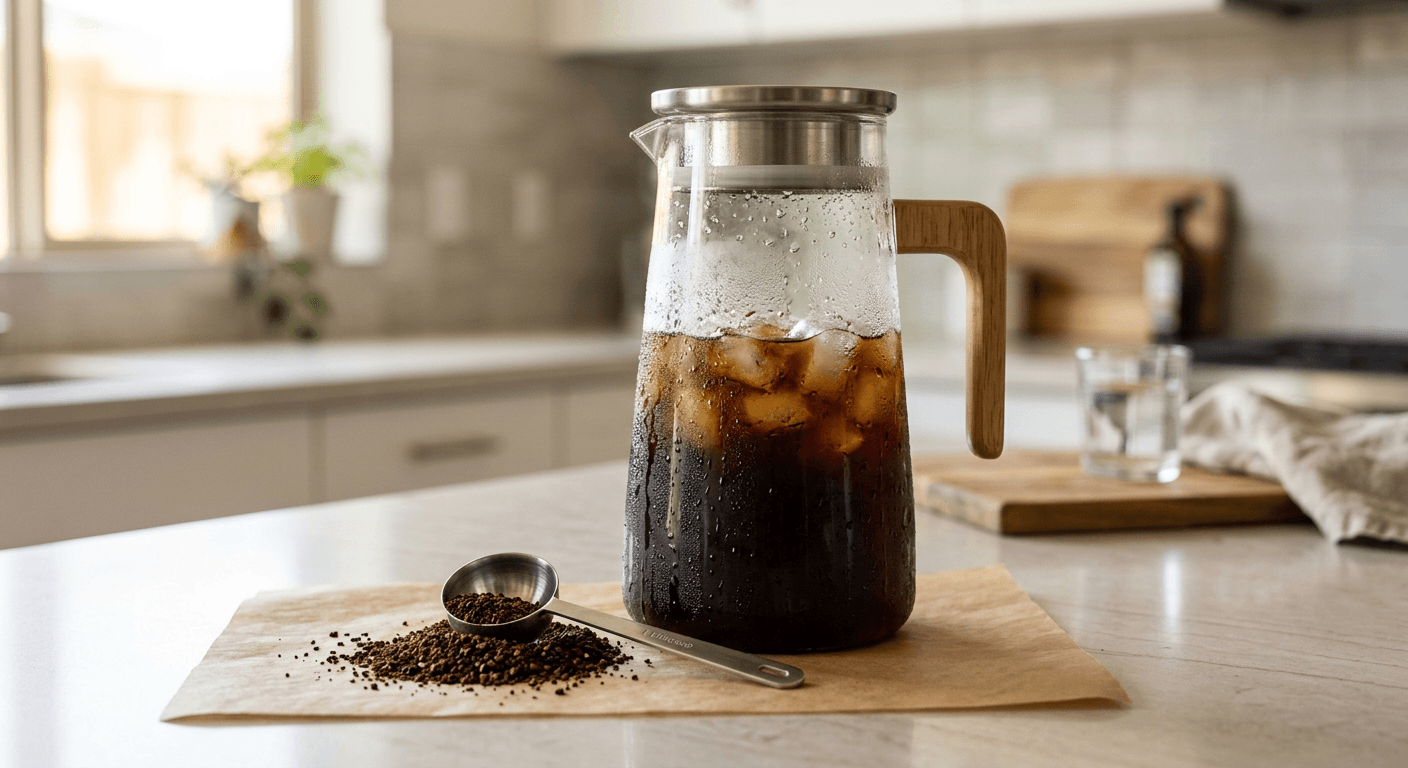
Cold extraction alters the chemical profile of your cup by leaving behind the specific lipids and acids that require near-boiling temperatures to dissolve. This thermal limit eliminates astringency, but it also demands exactness in your raw materials. Selecting the best coffee to make cold brew requires matching the physical format - whether raw beans or a commercial extract - to your required yield and timeline. A slow osmotic extraction extracts heavy chocolate notes, but poor filtration or the wrong water chemistry will flatline the resulting flavor. The options available today range from coarse raw materials that demand your patience to hyper-dense concentrates engineered for immediate service.
Quick Summary
The cold brewing process relies on extended ambient temperature steeps to extract soluble flavor compounds without pulling bitter tannins into the beverage. Finding the right format depends entirely on your daily consumption volume, your willingness to manage filtration, and your preferred dilution ratio.
- Whole beans and coarse grounds offer total control over extraction yield but require 12 to 18 hours of preparation.
- Liquid concentrates eliminate steep times entirely by providing high-density extracts that you dilute on demand.
- Ready-to-drink cans bypass preparation entirely but lock you into a fixed flavor profile and specific caffeine ceiling.
- Water chemistry, specifically mineral content, dictates how effectively the coffee releases its solubles during extraction.
Table of Contents
- Buying Guide / How to Choose the best coffee to make cold brew
- 1. Bizzy Coffee
- 2. Chameleon Cold-Brew
- 3. La Colombe Coffee Roasters
- 4. illy
- Storage Dynamics Override Initial Quality
- Recommended Reads
| Product | Preparation Format | Features | Pros | Cons | Target Audience |
|---|---|---|---|---|---|
| Bizzy Coffee | Whole Bean and Coarse Grounds | 18-hour brew optimization, organic sourcing | High volume control, clean extraction, flexible strength | Requires 18 hours, demands manual filtering, messy cleanup | Home brewers wanting total control over extraction variables |
| Chameleon Cold-Brew | Liquid Concentrates | Limestone-cured water, 16-hour process, fair trade | Immediate preparation, distinct mineral profile, predictable yield | Pre-set flavor profile, plastic packaging waste, limited shelf life once opened | Routine drinkers prioritizing speed without sacrificing high volume |
| La Colombe Coffee Roasters | Liquid Concentrates | 230mg caffeine per serving, 1:3 ratio, zero added sugar | Extremely high caffeine, minimal storage space, no sugar | Fixed intensity, aggressive caffeine floor, difficult to mix mildly | High-volume consumers needing a powerful, concentrated base |
| illy | Ready-to-Drink Cans | 100% Arabica, 12-hour brew, 190mg caffeine, 8.45 fl oz | Zero preparation, portable format, precise lighter roast | Highest cost per ounce, inflexible strength, creates metal waste | Commuters requiring immediate, single-serve portability |
Buying Guide / How to Choose the best coffee to make cold brew
Selecting a cold brew solution requires understanding how the physical state of the coffee dictates its extraction timeline and your daily involvement. A good coffee to make cold brew is one that matches your tolerance for preparation against your requirement for flavor control. We separate the market into three distinct Preparation Format categories.
Whole Bean and Coarse Grounds represent the foundational approach to cold extraction. By purchasing the raw material, you control the solvent (water), the steep time, and the final filtration. This category demands foresight - usually 12 to 24 hours of resting time - and requires physical equipment to separate the spent grounds from the liquid. It suits those who want to fine-tune their resulting beverage's strength by adjusting the ratio of coffee to water before the steep begins.
Liquid Concentrates act as an intermediate solution. The manufacturer has already performed the extended extraction process, removing the spent grounds and packaging a dense, high-yield liquid. You restore the beverage to a drinkable state by adding water or milk at a specific ratio. This format removes the wait time while still allowing you to dictate the final volume and temperature of the drink.
Ready-to-Drink Cans bypass the brewing and dilution phases entirely. The liquid inside the can is fully extracted, filtered, and diluted to a commercial standard. You simply open the container and consume it. This category sacrifices all user control in exchange for absolute portability and immediate access.
Practical rule: Always measure liquid concentrates by volume rather than pouring by eye; altering the manufacturer's intended ratio by even half an ounce fundamentally changes the total dissolved solids in the finished cup.
When sourcing raw materials for your own extraction, understanding how different various roast blends react to ambient water is critical. Light roasts retain floral notes but often lack the body required to push through heavy milk additions, while dark roasts provide the necessary structural density to survive aggressive dilution.
1. Bizzy Coffee
Water slowly breaches the cellular structure. Submerging coarsely milled coffee in ambient water for 18 hours forces a slow osmotic exchange. This pulls soluble solids from the bean. Bizzy Coffee operates within the Whole Bean and Coarse Grounds category. They also bottle ready-to-drink variants. The brand focuses heavily on organic sourcing and exact particle size distribution. The coarse grind profile ensures even water flow around the coffee particles. It completely avoids creating the dense mud that stalls filtration systems.
Coarse calibration dictates the extraction ceiling
The mechanism behind this organic cold brew relies entirely on limiting total dissolved solids. By explicitly designing their cold brew coffee grounds to steep for 18 hours, the company ensures the water has enough time to break down the cellulose and extract heavy, sweet compounds. A finer grind would accelerate this process but would simultaneously pull out the bitter tannins that cold brewing is specifically meant to avoid. Because the manufacturer has fixed the particle size, the home brewer only needs to manage the water temperature and the clock. If you prefer to grind your own beans to this exact specification, utilizing dense African espresso roasts can yield a similarly heavy body under extended extraction.
Physical labor marks the end of the steep. Managing wet, coarse grounds after 18 hours demands a robust filtration setup. The spent coffee retains a sheer volume of water. This means you will always lose a significant percentage of your initial liquid yield. A 10-minute filtering and cleaning process is required. I would bypass this option if your morning routine cannot accommodate this delay before you pour your first glass.
Purchase this when your primary constraint is achieving absolute control over the final strength of a multi-day supply of coffee.
Pros
- Allows complete control over the final water-to-coffee ratio
- Avoids the astringency associated with finer particle extractions
- Significantly lowers the cost per serving compared to bottled options
Cons
- Requires an 18-hour delay between preparation and consumption
- Demands physical filtration equipment and manual cleanup
- Liquid yield is reduced by water trapped in the spent grounds
2. Chameleon Cold-Brew
How does a cafe manager portion out morning service with exact yield predictability without managing wet grounds? Chameleon Cold-Brew answers this by manufacturing an organic extract in Austin, Texas, firmly anchoring the Liquid Concentrates category. Their process scales up the traditional immersion method, employing a 16-hour brewing cycle that uses fair trade coffee and specialized regional water chemistry to create a dense base liquid that consumers dilute at the point of service.
Limestone buffering alters perceived acidity
The critical mechanism in this concentrate is the interaction between the roasted coffee and the limestone-cured Texas Hill Country water used during the 16-hour steep. Calcium carbonate in the water acts as a buffer against the chlorogenic acids in the coffee. This chemical buffering mutes the sharp acidity typically found in organic beans, resulting in a heavier, sweeter perceived body. A standard 32 fl oz bottle of this concentrate yields exactly 64 oz of brewed coffee when diluted at the recommended ratio. Notably, the black coffee concentrate variant retains some heavier lipid compounds, registering at 15 calories per serving, which contributes to the viscous mouthfeel.
Those mixing drinks at home face a specific challenge. Avoid this concentrate if you live in an area with extremely hard tap water. The manufacturing process already buffers the liquid with limestone. Diluting it at home with heavy, mineral-rich tap water can push the pH balance too far. This results in a chalky, flat beverage. It entirely lacks structural brightness. I would hesitate to use this outdoors without a neutral water source to mix into your outdoor enamel camp mugs.
Opt for this concentrate when you require immediate, high-volume yield and have access to filtered, soft water for dilution.
Pros
- Eliminates the 16-hour steep time for the end user
- Limestone buffering creates a smooth, low-acid profile
- Doubles its volume upon standard dilution
Cons
- Requires careful water matching to prevent flat flavors
- Introduces heavy plastic bottles into the waste stream
- Must be refrigerated continuously once the seal is broken
3. La Colombe Coffee Roasters
High-volume consumers who prioritize pharmacological impact over delicate origin characteristics require an extraction that maximizes alkaloid retention. La Colombe Coffee Roasters occupies the Liquid Concentrates category by producing a highly caffeinated, multi-serve liquid designed to stretch further than standard grocery offerings. While they also manufacture canned draft lattes, their concentrate formulation is built around a severe dilution requirement that drastically reduces the packaging footprint per serving.
High density mandates strict dilution ratios
The mechanism of this extract relies on an unbalanced coffee-to-water ratio during the initial industrial steep. By forcing a massive volume of ground coffee into a restricted volume of water, the resulting liquid is hyper-saturated. The company requires mixing 1 part concentrate to 3 parts water. When mixed correctly, the resulting beverage delivers a staggering 230mg of caffeine per serving with zero added sugar. For context, their ready-to-drink cold brew cans contain 180mg of caffeine. If you usually grab a whole foods cold brew coffee concentrate expecting a mild 1:1 mix, applying that logic here will result in a severely over-caffeinated and bitter cup.
The barrier to everyday use lies in that uncompromising caffeine floor. Because a single serving dictates a 230mg intake, you cannot easily mix a mild afternoon beverage without reducing the concentrate volume so drastically that the resulting drink tastes entirely like water. We would hold off on this system if you are sensitive to caffeine spikes or prefer drinking multiple large glasses throughout a single afternoon.
Select this high-density option if shelf space in your refrigerator is at a premium and you require a severe caffeine dosage to start your day.
Pros
- 1:3 dilution ratio drastically reduces storage requirements
- Contains zero added sugar to interfere with dietary constraints
- Delivers an aggressive 230mg of caffeine per serving
Cons
- Makes mixing a mild, low-caffeine drink nearly impossible
- Accidental under-dilution results in severe bitterness
- Lacks the nuanced floral notes found in lighter extracts
4. illy
Rather than requiring a lengthy overnight steep or demanding that the user measure out specific water ratios, the illy Cold Brew Classico delivers immediate consumption in the Ready-to-Drink Cans category. This Italian brand translates their traditional espresso heritage into a single-serve, ambient-extracted beverage. By locking the extraction variables at the factory level, they remove user error from the equation, delivering a standardized flavor profile in every sealed container.
Short steeps preserve volatile aromatics
The fundamental mechanism here is a restrained extraction timeline applied to specific raw materials. illy utilizes a 100% Arabica blend and limits the cold-brewing process to exactly 12 hours. This shorter steep time, combined with a medium roast profile, prevents the water from breaking down the heavier, woody compounds in the cellular structure of the cold brew coffee beans. The result is a lighter, more aromatic liquid. Each 8.45 fl oz can is sealed to prevent oxidation and delivers 190mg of caffeine. By halting the extraction at 12 hours, the liquid retains the volatile fruity notes that are typically drowned out in 18-hour or 24-hour steeps.
You will find this format inadequate when attempting to build complex milk-based iced beverages. The 12-hour extraction produces a delicate, tea-like body that easily disappears when subjected to heavy creams or sugary syrups, leaving you with a cup that tastes primarily of milk. We would choose a different format entirely if your daily habit involves layering multiple dairy or oat milk additions into your glass.
Reach for this canned format when you need uncompromising portability and prefer to drink your cold extraction entirely black.
Pros
- Zero preparation or cleanup required
- Shorter 12-hour steep preserves delicate Arabica aromatics
- Sealed aluminum prevents oxidation prior to opening
Cons
- Lacks the body required to cut through heavy milk additions
- The highest cost per ounce of any preparation format
- Generates continuous metal waste for daily drinkers
Storage Dynamics Override Initial Quality
How you manage the coffee after the purchase dictates the quality of the final extraction more than the brand name on the package. Translating these formats into a daily routine requires matching the category to your specific operational limits.
If your daily bottleneck is a lack of morning preparation time but you demand a specific strength profile, Liquid Concentrates remove the steep time while preserving your ability to dictate the dilution ratio. You bypass the wait entirely.
When your primary limitation is transit - commuting, hiking, or working in environments without refrigeration - Ready-to-Drink Cans provide absolute stability. The sealed aluminum prevents the rapid oxidation that destroys the flavor of cold liquids transported in unsealed tumblers.
For readers attempting to maximize value and completely control the extraction variables, Whole Bean and Coarse Grounds remain the structural foundation. You trade 18 hours of patience and some manual cleanup for the ability to experiment with different origins, similar to exploring assorted sample packs to find the exact flavor profile that survives a cold steep.