4 Top Coffee Brands for the Home Brewer's Daily Routine
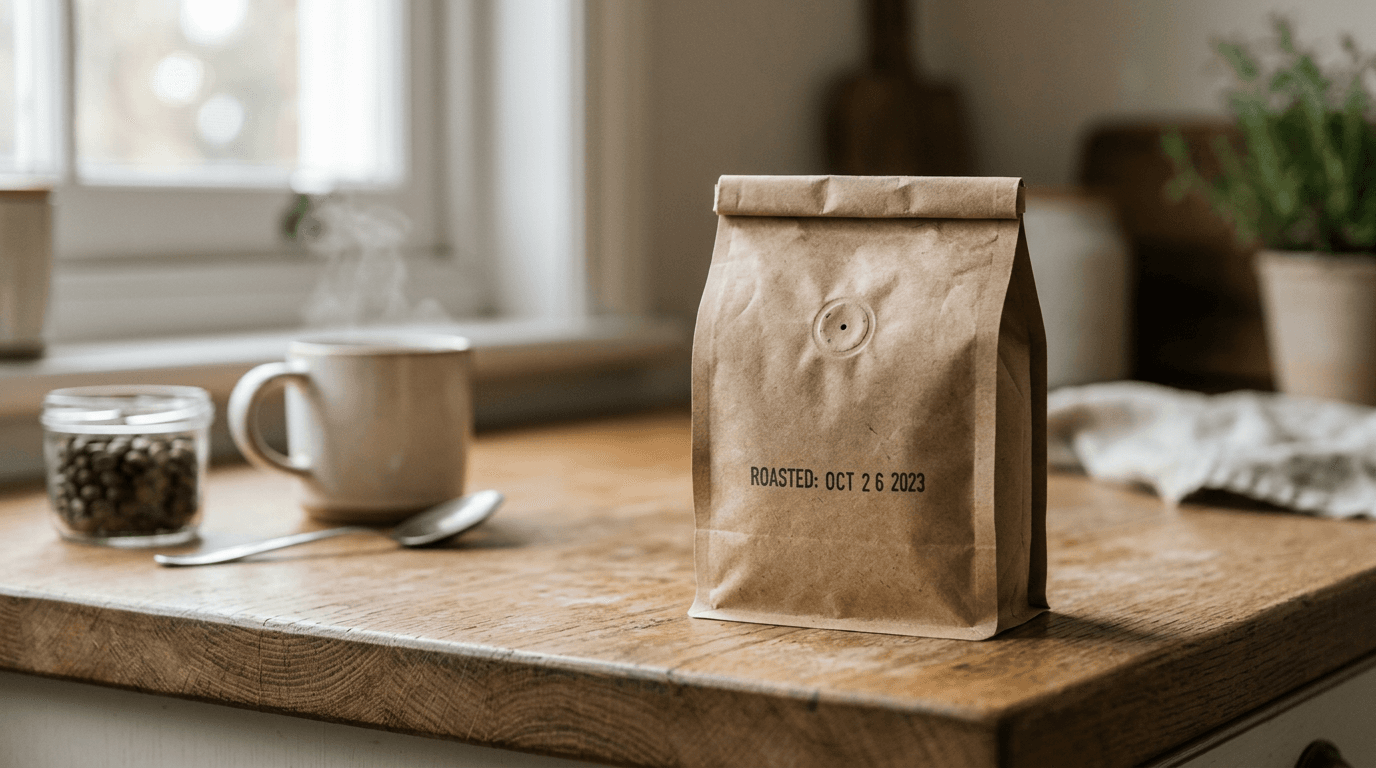
You dial in your burr grinder, carefully weigh out 18 grams, and execute a flawless pour-over technique, only to end up with a flat, muted cup. The culprit usually sits right on the packaging: a roast date that passed months ago, or worse, a "best by" date that intentionally masks exactly when the beans left the drum. Navigating the current market of coffee brands requires looking past minimalist packaging and examining the actual supply chain mechanics. Whether you prefer vibrant single origin coffee or reliable staples, the logistics of how a roaster moves product from the cooling tray to your doorstep dictates the final extraction quality.
Quick Summary
Finding the right supplier means matching a roaster's production schedule to your daily consumption rate. The specialty coffee sector operates on strict processing windows, meaning the companies that dominate the market prioritize rapid fulfillment over sitting inventory. Choosing among these coffee companies depends entirely on whether you require competition-level processing, automated delivery frequencies, or specific grind capabilities.
- Subscription models dictate freshness based on specific weekly batch processing days.
- Some roasters refuse to ship pre-ground beans to maintain cellular extraction integrity.
- High quality coffee beans often require reaching specific cart minimums to offset premium freight costs.
- Experimental micro-lots are typically restricted to highly exclusive monthly tiers with strict volume caps.
Table of Contents
- Quick Summary
- Comparison Table
- Buying Guide / How to Choose Coffee Brands
- 1. Onyx Coffee Lab
- 2. Blue Bottle Coffee
- 3. Counter Culture Coffee
- 4. Black & White Coffee Roasters
- Aligning Roaster Specialization With Your Routine
- Recommended Reads
Comparison Table
| Product | Roaster Specialization | Features | Pros | Cons | Target Audience |
|---|---|---|---|---|---|
| Onyx Coffee Lab | Transparent Sourcing | Tuesday processing, 24h shipping, $40 free shipping threshold | Exact traceability, fast fulfillment, reliable staples | Strict roast days, $5 shipping fee on small orders, high baseline price | Buyers wanting farm-level data and consistent blends |
| Blue Bottle Coffee | Scale & Consistency | Whole bean exclusively, included shipping, granular frequency | Built-in freight costs, flexible cadences, uniform extraction | No pre-ground options, limited to major regions, high per-ounce cost | Users with dedicated milling hardware needing exact supply flow |
| Counter Culture Coffee | Sustainable Direct-Trade | Blend boxes, prepaid gift tiers, $30 free shipping minimum | Cost-effective bulk, reliable supply, prepaid management | Punishes low volume, higher shipping threshold, slower rotation | Offices and multi-drinker households clearing high volumes |
| Black & White Coffee Roasters | Artisanal & Experimental | 4-day roast schedule, included shipping, 100g Black Label tier | Constant variety, rapid turnaround, pre-ground availability | Tiny micro-lot volumes, volatile flavor profiles, complex dial-in | Advanced hobbyists chasing experimental processing methods |
Buying Guide / How to Choose Coffee Brands
Evaluating artisan coffee requires understanding how a roaster's operational model dictates what ends up in your hopper. We classify operations across a specific lens: Roaster Specialization. Every organization optimizes for a different outcome, and comparing them on aesthetic appeal alone ignores how their supply chain operates. While some consumers prioritize the airtight, oxygen-free convenience of 12 pack single serve coffee capsules, managing a recurring flow of fresh roasted coffee demands a completely different set of criteria.
Transparent Sourcing
Operations in this category prioritize farm-level traceability over sheer volume. They publish exact purchase prices, cupping scores, and washing station details for every lot. The mechanism here relies on paying premiums for specific harvests, meaning their catalog shifts wildly as seasons change. When engaging with this tier, verify your own palate preferences; if you dislike bright, citric acidity, highly traceable washed lots might frustrate you, and you may find yourself reaching for consistent coffee blends instead.
Scale & Consistency
This category serves the buyer who demands that their morning cup tastes exactly the same in December as it did in July. These roasters utilize massive blending facilities and advanced atmospheric controls to iron out the agricultural volatility of the raw product. They blend multiple origins to achieve a static flavor profile. This approach removes the guesswork, which is ideal if you are dialing in complex automated machinery and refuse to constantly chase a wandering extraction parameter.
Sustainable Direct-Trade
Focusing on ecological impact and grower stability, these roasters sign multi-year contracts with cooperatives rather than chasing hype-driven micro-lots. Their infrastructure supports high-volume daily drinking while maintaining ethical supply chains. They typically offer bulk configurations that make recurring deliveries financially sustainable, eliminating the bottleneck of managing individual weekly orders.
Artisanal & Experimental
Occupying the volatile edge of the market, this category explores co-fermentations, anaerobic processing, and extreme altitude varietals. The production runs are minuscule, often selling out in hours. These beans require precise extraction parameters to prevent overwhelming sourness or aggressive fermentation notes, making them suitable only for operators willing to meticulously measure temperature and yield.
Practical rule: Always align your delivery cadence with your resting protocol. Coffee shipped on roast day needs at least a week of degassing before water touches it; if your hopper is empty today, you ordered too late.
1. Onyx Coffee Lab
Onyx Coffee Lab processes recurring subscription orders every Tuesday and ships them within 24 hours of processing. This Arkansas-based operation serves home brewers who want highly transparent sourcing data alongside reliable flavor profiles. Operating strictly within the Transparent Sourcing category, buyers should not compare this logistics model directly to mass-market operations that pull inventory from aging warehouse shelves.
When you subscribe to their year-round staples like Southern Weather or Monarch, the pricing starts at $21.50 for a 10-ounce bag. Because they consolidate their production runs to specific days of the week, your fulfillment window is rigidly tied to that Tuesday cycle. If your automated renewal triggers on a Wednesday, you are waiting nearly a full week before the beans enter the drum. Once processed, standard ground shipping takes three to five business days and carries a flat rate of $5.00 for smaller orders. This transit time effectively doubles as a degassing period, meaning the beans often arrive exactly as they enter their peak solubility window.
Precision logistics rely on volume thresholds
The structural limit here is the $40 minimum required for free shipping. Ordering a single 10-ounce bag leaves you absorbing a steep markup just in freight costs, forcing you to either over-order or pay the penalty. If you try to stretch that 10-ounce bag across three weeks to offset the fee, the last few days of your cycle will suffer from noticeable staling. We would hesitate to set up a recurring delivery here unless the household reliably clears two bags per shipment cycle to trigger the shipping waiver.
Secure this subscription when your daily consumption naturally clears the volume threshold required to eliminate the shipping surcharge.
Pros
- Guaranteed 24-hour turnaround from roasting to shipping
- Transit time naturally accounts for the necessary degassing phase
- Extensive farm-level transparency on every available lot
Cons
- Rigid Tuesday processing punishes mid-week subscription triggers
- The $5.00 standard shipping fee applies to all single-bag orders
- Subscriptions utilize 10-ounce bags rather than standard 12-ounce sizing
2. Blue Bottle Coffee
The most common error home brewing teams make when shifting to premium subscriptions is assuming they can dictate the exact processing format. Blue Bottle Coffee is a California-based roaster that provides fresh-roasted custom coffee subscriptions strictly to buyers equipped with their own milling hardware. Sitting firmly in the Scale & Consistency category, this operation should never be evaluated against micro-roasters pushing volatile, unpredictable processing methods.

The pricing structure bakes the transit costs directly into the retail price. Complimentary shipping is automatically included. You configure the pipeline by selecting either 6-ounce bags that start at $17 per shipment, or standard 12-ounce bags starting at $27. The logistical engine easily adjusts your delivery cadence. Shipments arrive every week, every two weeks, every three weeks, or every four weeks. Because shipping is complimentary across every tier, there is no financial penalty for choosing a weekly 6-ounce delivery rather than a bi-weekly 12-ounce delivery. This keeps your immediate inventory incredibly fresh.
Absolute format restrictions mandate specialized hardware
The definitive barrier to entry is that Blue Bottle Coffee only offers whole bean coffee for its subscriptions, with absolutely no pre-ground option available in the system. If your morning routine relies on a standard drip machine and you lack a high-quality burr grinder, these shipments are entirely useless to you. Attempting to use a cheap blade grinder will simply shatter the beans, destroying the extraction uniformity that the sourcing team intended. We would look elsewhere if convenience and immediate readiness outrank cup clarity in your daily workflow.
Opt for this delivery model if you already own precise milling equipment and demand granular control over your inventory flow without absorbing shipping fees.
Pros
- Complimentary shipping is included on every subscription tier
- Highly granular delivery cadences ranging from one to four weeks
- The 6-ounce tier prevents beans from staling in low-volume households
Cons
- Zero pre-ground options force reliance on personal hardware
- The per-ounce cost on the smaller bags carries a premium
- Flavor profiles prioritize safety and uniformity over extreme complexity
3. Counter Culture Coffee
Managing office supplies or securing long-term gifts often turns into a logistical bottleneck of tracking monthly invoices and adjusting quantities. Counter Culture Coffee operates out of Durham, North Carolina, providing direct-trade and sustainably sourced coffees to high-volume households and small teams. Operating within the Sustainable Direct-Trade category, it bypasses the artificial scarcity models used by boutique hype brands to focus entirely on reliable, continuous supply.
Their recurring infrastructure eliminates the friction of individual orders. It keeps hoppers constantly full. The single-bag Single-Origin Subscription option starts at $19.50 per shipment, dropping fresh harvests onto your doorstep as different producing regions come into season. For environments tearing through inventory much faster, the Blend Box Subscription delivers two 12-ounce bags of rotating year-round blends every two weeks for a flat $35.00. Furthermore, they allow you to offload the billing entirely. Prepaid gift subscriptions are available for fixed duration terms of three months, six months, or twelve months.
Thresholds intentionally shape purchasing behavior
The primary constraint is how the logistics pricing handles low-volume drinkers. Counter Culture Coffee provides free shipping strictly on all orders of $30 and up. Because the standard single-origin tier sits at $19.50, a solo drinker buying one bag a month fails to trigger the freight waiver, making the Blend Box a mathematically superior mechanism per ounce. We would pass on this ecosystem if you only brew one cup a day, as you will constantly battle between paying for shipping or letting a second bag go stale on your counter.
Rely on this roaster for supplying larger households or small offices that possess the consumption volume to make the bulk tiers highly efficient.
Pros
- The Blend Box offers significant value for multi-drinker households
- Prepaid terms completely eliminate monthly invoice management
- Sustainable sourcing models guarantee long-term cooperative stability
Cons
- The $30 free shipping threshold excludes single-bag subscribers
- Single-origin rotations are determined by the roaster, limiting choice
- High-volume focus means experimental micro-lots are rare
4. Black & White Coffee Roasters
While larger operations focus on maintaining uniform flavor profiles across thousands of shipments, Black & White Coffee Roasters intentionally chases volatility and boundary-pushing processing. Based in Raleigh, North Carolina, this artisanal operation serves advanced hobbyists hunting for expressive, unconventional lots. Firmly anchored in the Artisanal & Experimental category, this is not a solution for buyers wanting predictable, chocolate-heavy notes every single morning.

The production cycle moves rapidly to handle demand, with coffee roasted on Mondays, Tuesdays, Thursdays, and Fridays. Orders placed before 12:00 AM ET enter the queue immediately, roasting and shipping on the very next available roast day. Their monthly Roaster's Choice subscription eliminates variable checkout math by pricing at $26.00 for a one-bag tier and $43.00 for a two-bag tier, with all shipping costs fully included. Unlike purist operations that lock down their formats, subscribers can choose to have their beans pre-ground simply by indicating their specific brewing method in the order notes.
Experimental lots arrive with severe capacity limits
The strictest limitation involves their absolute top-tier offerings. The specialty 'Black Label' subscription delivers a single 100-gram bag of competition-style coffee exactly once a month. For anyone pulling 18-gram espresso shots, that leaves you with barely five doses; if your grinder requires purging or you miss the dial-in on the first two shots, you have effectively wasted half the shipment. We would strictly avoid the Black Label tier if your brewing technique involves high waste or you prefer the forgiveness of a large, automated hopper.
Allocate your budget here when you want to explore highly experimental fermentation methods and possess the skills to extract them efficiently on the first try.
Pros
- Four distinct roasting days per week ensures rapid fulfillment
- Pre-ground options are available by simply noting the brew method
- Shipping costs are completely folded into the subscription price
Cons
- The 100-gram Black Label tier offers zero margin for extraction errors
- Experimental processing often yields polarizing flavor profiles
- Frequent catalog rotation makes it difficult to reorder a favorite lot
Aligning Roaster Specialization With Your Routine
Selecting the correct supplier requires matching their logistical reality to your daily consumption habits.
When your requirement is Scale & Consistency, the decision rests on eliminating variables. If you want a static flavor profile that never forces you to adjust your grind settings, lean into operations that prioritize uniform blending and rigid delivery schedules. This removes the friction from early mornings and guarantees your hardware always performs predictably.
If you fall into the Transparent Sourcing category, you must accept seasonal rotation. Buyers who want to know the exact elevation and processing station of their beans should route their budget here, provided they have the patience to dial in a new bean every month without getting frustrated by shifting solubility.
Buyers who need Sustainable Direct-Trade solutions are usually supplying multiple drinkers. This is the optimal path for office environments or large households where burning through two pounds a week makes small boutique bags financially ruinous. Bulk configurations and prepaid terms keep the coffee flowing without requiring daily management, leaving room for perhaps exploring curated coffee sample packs on the side.
Those seeking Artisanal & Experimental lots must treat their coffee as a dedicated hobby. You choose this route when you possess advanced burr grinders, precise temperature-controlled kettles, and a willingness to waste a few doses finding the perfect extraction for a highly volatile co-ferment. Whether you are pulling tight African espresso shots or experimenting with flavored coffee profiles, this category demands deep engagement with the brewing process.